
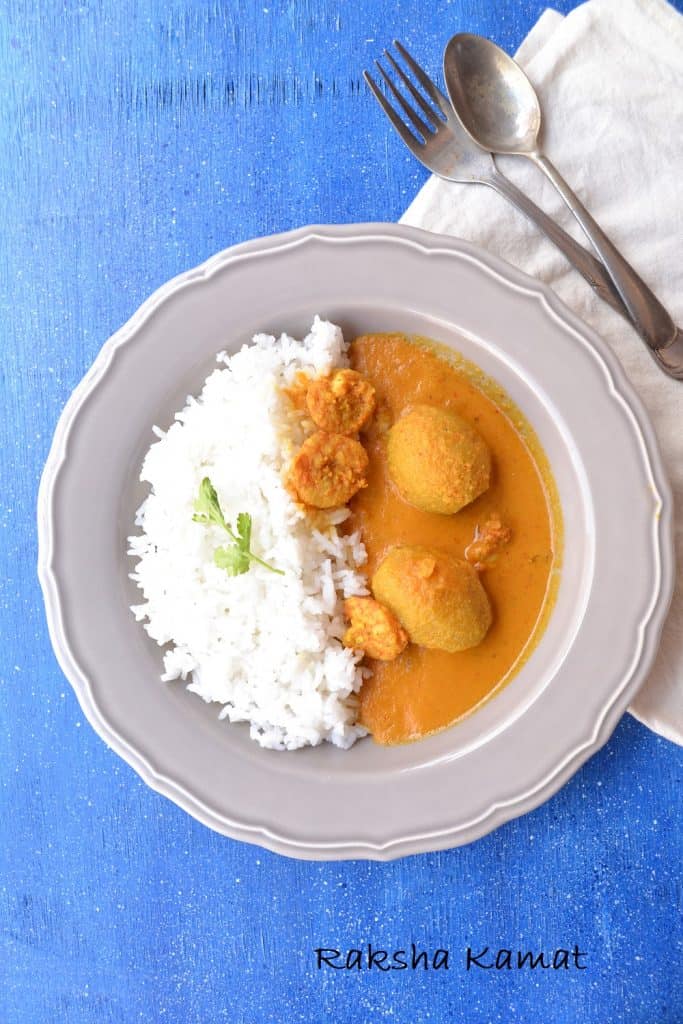
We prepare different variations of Goan prawn curry. One such variation is Goan prawn curry with hog plum or “ambade”. In Konkani, hog plums are known as ambade which have a sweet and sour taste depending on the ripeness. This hog plum curry with prawn is made in a mildly spiced coconut-based curry. Goan prawn and coconut curry with hog plum tastes spicy and tangy.
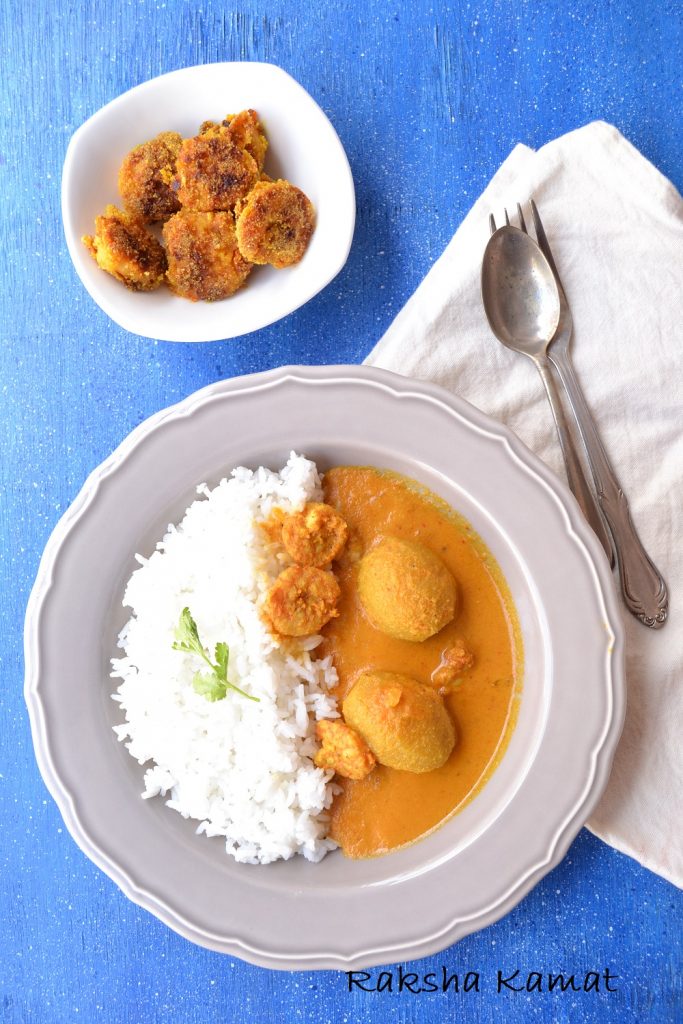
Rice and fish curry are the staple food of most of the Goans. We prepare fish curry in different ways. Sometimes we add vegetables like lady finger like as in Goan prawn curry with bhindi or we add radish as in Goan prawn curry with radish. We like our prawn curry bit spicy and tangy. So, we also add seasonal delicacies like raw mango, bilimbi, star fruit or hog plums.
Also see:
Ingredients that go in making Goan Saraswat prawn curry with ambade:
- Prawns / Shrimps: Use fresh prawns or shrimps to make this delicious prawn curry with hog plums. Peel and devein the shrimps before using them in this prawn hog plum curry.
- Hog plums: Use fresh green, unripe hog plums(ambade) to make this recipe. You need to peel the hog plums before using it in this recipe.
For Gravy:
- Coconut: Use freshly grated coconut in this recipe. Refer to this recipe you want to make prawn curry without coconut.
- Spices: Traditionally spices like tamarind, turmeric powder, dry red chillies, black pepper corns and coriander seeds are used in making this authentic Goan prawn curry with hog plum.
- Onion: We add little bit of chopped onion while making this shrimp curry Goan style. Addition of onion enhances the taste of the curry.
For marinating the prawns: I have used turmeric powder, red chili powder and salt to marinate the prawns.
You might be interested in other Goan prawn recipes like:
Steps to make hog plum curry recipe with prawns:
For Marination:
- Apply the turmeric powder, chili powder and salt to prawns. Marinate for minimum 30 minutes. If you want to marinate for longer time, then keep the marinated prawns in refrigerator.
For Gravy:
- Grind grated coconut, turmeric powder, tamarind, peppercorns, coriander, and red chilies by adding 3/4th cup water.
- In a kadai, add 1/2 cup water, prawns, peeled ambade (hog plums) and chopped onion. Add 2 tablespoon ground gravy to this. Let it cook for 10 minutes.
- Then pour the remaining gravy from mixer/grinder and stir. If gravy becomes thick, add ¼ th cup water and simmer for 10 minutes.
- Add salt to taste. Remember that the prawns were marinated with salt. So, add only 1/2 teaspoon salt first. Taste and add more if needed.
- Switch off the gas.
How to serve this Goan prawn curry with hog plum?
This Goan shrimp curry with hog plum can be served with steamed rice along with futi sol kadi, cabbage subzi and kismoor. Serve the left over prawn curry for dinner with Goan pao and omelette.
Also try ambadyachi chutney / Hog plum chutney and ambadyachi uddamethi (Vegan hog plum curry in coconut milk)
Notes to keep in mind for making prawns curry with hog plum:
- The prawns curry gravy should neither be too thick nor too thin.
- Remember that the prawns were marinated with salt.
- I have added less tamarind to the prawn’s curry then I would have usually added as hog plums are bit sour.

Goan Prawn Curry With Hog Plum (Ambade)
Ingredients
- 15-20 Prawns / Shrimps de-shelled and de-veined
- 4-5 5 hog plums ambade, peeled
For Gravy:
- 1/2 cup grated coconut coconut of small size
- 1/2 tamarind marble sized ball
- 1 teaspoon turmeric powder
- 2-3 dry red chilies byadgi chilies / shepda in Konkani / Kashmiri red chilies
- 5 black pepper corns
- 1/2 teaspoon coriander seeds
- 1/2 onion chopped
For marinating the prawns:
- 1/4 teaspoon turmeric powder
- 1 teaspoon red chili powder
- 1/2 teaspoon salt
Instructions
For Marination:
- Apply the turmeric powder, chili powder and salt to prawns. Marinate for minimum 30 minutes. If you want to marinate for longer time, then keep the marinated prawns in refrigerator.
For Gravy:
- Grind grated coconut, turmeric powder, tamarind, peppercorns, coriander, and red chilies by adding 3/4th cup water.
- In a kadai, add 1/2 cup water, prawns, peeled ambade (hog plums) and chopped onion. Add 2 tablespoon ground gravy to this. Let it cook for 10 minutes.
- Then pour the remaining gravy from mixer/grinder and stir. If gravy becomes thick, add ¼ th cup water and simmer for 10 minutes.
- Add salt to taste. Remember that the prawns were marinated with salt. So, add only 1/2 teaspoon salt first. Taste and add more if needed.
- Switch off the gas.
Video
Notes
- The prawns curry gravy should neither be too thick nor too thin.
- Remember that the prawns were marinated with salt.
- I have added less tamarind to the prawn’s curry then I would have usually added as hog plums are bit sour.
Pin this image on Pinterest



Leave a Reply