
This khatkhate recipe, also pronounced khatkhatem, is a mixed vegetable stew made across Goan households, especially during festivals and religious occasions — a festival table would feel incomplete without it. It’s genuinely nutritious, built from a wide mix of vegetables, and comes together as a completely zero-oil recipe that’s naturally vegan and made without onion or garlic.
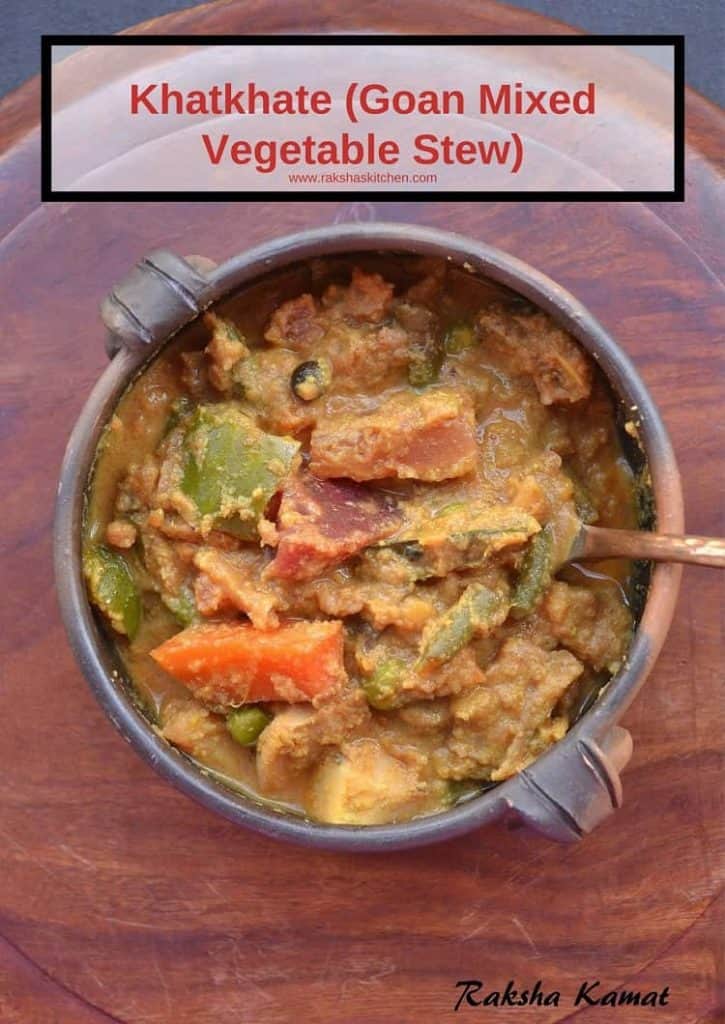
Khatkhate is often compared to Kerala’s avial, since both are mixed-vegetable coconut-based stews, but the two are distinct: Goan khatkhate skips yogurt entirely, uses tamarind and jaggery instead of curd for its flavor balance, and gets a signature aromatic kick from teffal (also called tirphal or Sichuan pepper) — an ingredient this dish is genuinely incomplete without.
What Is Teffal (Tirphal)?
Teffal, also known as tirphal or Sichuan pepper, is a small, aromatic berry used across Konkani and Goan cooking to add a distinctive citrusy, slightly numbing flavor note. It’s the ingredient that gives khatkhate its signature character — without it, the stew tastes noticeably flatter. If you can’t find teffal locally, look for it under “Sichuan pepper” or “tirphal” at Indian or Asian grocery stores, since it’s the same berry used more widely across Sichuan cuisine.
Which Vegetables Go In (and Which Don’t)
Khatkhate works with a wide range of vegetables, but a few genuinely don’t belong in it:
Good additions: pumpkin, raw banana, yam, colocasia root (arbi), ridge gourd, cucumber, radish, carrot, beetroot, drumstick, corn on the cob, sweet potato, gram, French beans, and cauliflower. Cucumber, colocasia, ridge gourd, and pumpkin are considered essential for the best flavor, and any leftover vegetables sitting in your fridge can usually go in too.
Skip these: brinjal (it turns mushy), lady’s finger (it makes the stew slimy), bitter gourd (it makes the whole dish bitter), amla, ash gourd, and leafy greens. Onion and garlic are also left out entirely — khatkhate is meant to stay a pure vegetarian, no onion, no garlic dish.
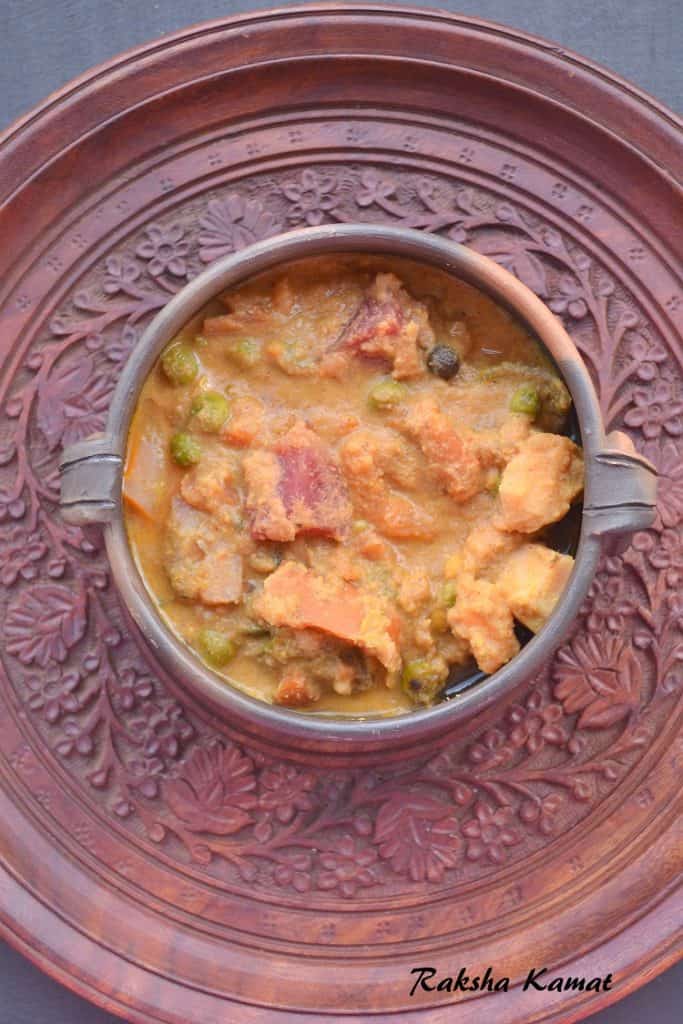
Ingredients for Khatkhate
- Mixed vegetables – see selection guide above; aim for a good variety in both flavor and texture.
- Toor dal – adds body and protein to the stew.
- Coconut, freshly grated – the base of the gravy.
- Tamarind – for tang; kokum is deliberately not used in this recipe.
- Jaggery – for sweetness that balances the tamarind’s tang.
- Teffal (tirphal/Sichuan pepper) – the essential aromatic finishing note.
- Turmeric powder and red chili powder – for color and mild heat.
How to Make Khatkhate (Step-by-Step)
Step 1: Make the Gravy Base In a mixer jar, grind grated coconut with red chili powder, turmeric powder, and tamarind into a fine paste.
Step 2: Cook the Toor Dal Boil 2 cups of water and add the toor dal. Cook for 5 minutes.
Step 3: Add the Firmer Vegetables First Add yam, carrot, beetroot, and radish, and cook for 10 minutes — these take longer to soften than the rest.
Step 4: Add the Remaining Vegetables Add the rest of the vegetables and cook until everything is soft.
Step 5: Add the Ground Gravy Pour the ground coconut paste into the cooked vegetables and mix well.
Step 6: Finish with Teffal Crush the teffal berries and add them to the gravy. Simmer for 5 minutes on low flame. The gravy should end up neither too dry nor too watery.
Serving Suggestions
Khatkhate is traditionally served with steamed rice or puris, and it’s a common centerpiece of Goan festival meals, especially during Ganesh Chaturthi and other religious occasions.
Frequently Asked Questions
What does “khatkhate” mean, and why is it also called “khatkhatem”? Both are regional pronunciations of the same dish — a mixed vegetable stew central to Goan festival cooking. There’s no meaningful difference between the two names; it’s simply how the word is said across different households.
What is teffal, and can I substitute it? Teffal (also called tirphal) is a small aromatic berry similar to Sichuan pepper, and it’s genuinely essential to khatkhate’s signature flavor. If you can’t find it locally, look for “Sichuan pepper” at an Asian grocery store — it’s the closest match, though the flavor will be slightly different from true tirphal.
Why doesn’t khatkhate use kokum or yogurt like similar stews? This particular Goan style keeps the souring to tamarind and jaggery only, skipping both kokum and yogurt (unlike Kerala’s avial, which uses yogurt). It’s a defining feature of the dish’s specific character, not an oversight.
Why can’t I add brinjal, lady’s finger, or bitter gourd? Each interferes with the dish’s texture or flavor: brinjal turns mushy, lady’s finger becomes slimy, and bitter gourd makes the whole stew taste bitter. These are genuinely worth avoiding rather than a matter of preference.
Is khatkhate the same as avial? They’re closely related mixed-vegetable coconut stews from neighboring coastal cuisines, but khatkhate skips yogurt (which avial includes) and relies on tamarind, jaggery, and teffal for its distinct flavor profile instead.
Can I make khatkhate ahead of time? Yes — it keeps well refrigerated for a day or two, and the flavors often deepen slightly overnight, similar to many vegetable-based Indian stews.
You might also like: Ambadyache Raite (Hog Plum Raita), Amlechi Uddamethi (Goan Raw Mango Curry), Mooga Gathi, Varan Bhaat.

Khatkhate (Goan Mixed Vegetable Stew)
Ingredients
- ½ cup pumpkin peeled and chopped into 1-inch cubes
- ½ cup raw banana peeled and chopped into 1-inch cubes
- ¼ cup yam peeled and chopped into 1-inch cubes
- ¼ cup gram
- ½ cup ridge gourd peeled and chopped into 1-inch cubes
- ½ cup carrot peeled and chopped into 1-inch cubes
- ¼ cup cucumber peeled and chopped into 1-inch cubes
- ¼ cup radish peeled and chopped into 1-inch cubes
- 1 drumstick peeled and cut into 2½-inch pieces
- ½ cup beetroot peeled and chopped into 1-inch cubes
For the gravy:
- 1 cup grated coconut
- ½ teaspoon turmeric powder
- 10 teffal berries or Sichuan pepper
- ¼ cup toor dal washed and soaked for 1 hour
- 2 teaspoons red chili powder
- 1 marble-sized ball of tamarind
- 1 teaspoon jaggery
- Salt to taste
Instructions
- Grind grated coconut with chili powder, turmeric powder, and tamarind into a fine paste.
- Boil 2 cups water and add toor dal. Cook for 5 minutes.
- Add yam, carrot, beetroot, and radish. Cook for 10 minutes.
- Add the remaining vegetables and cook until all are soft.
- Pour the ground paste into the cooked vegetables and mix.
- Crush the teffal berries and add to the gravy. Simmer for 5 minutes on low flame.
Notes
Avoid brinjal, lady's finger, bitter gourd, amla, ash gourd, and leafy greens — each interferes with the dish's texture or flavor.
No onion, garlic, or kokum is used in this recipe.


I could cook khatkhate today with help of your recepi.
Thanks Akshada for your support.