In Goa, Diwali begins in the dark, hours before sunrise. The Narkasur effigies are burnt, the oil lamps are lit, and then comes the moment every Goan child waits for: a table full of fov (poha) made in five different ways, with sweets and crunchy faral on the side.
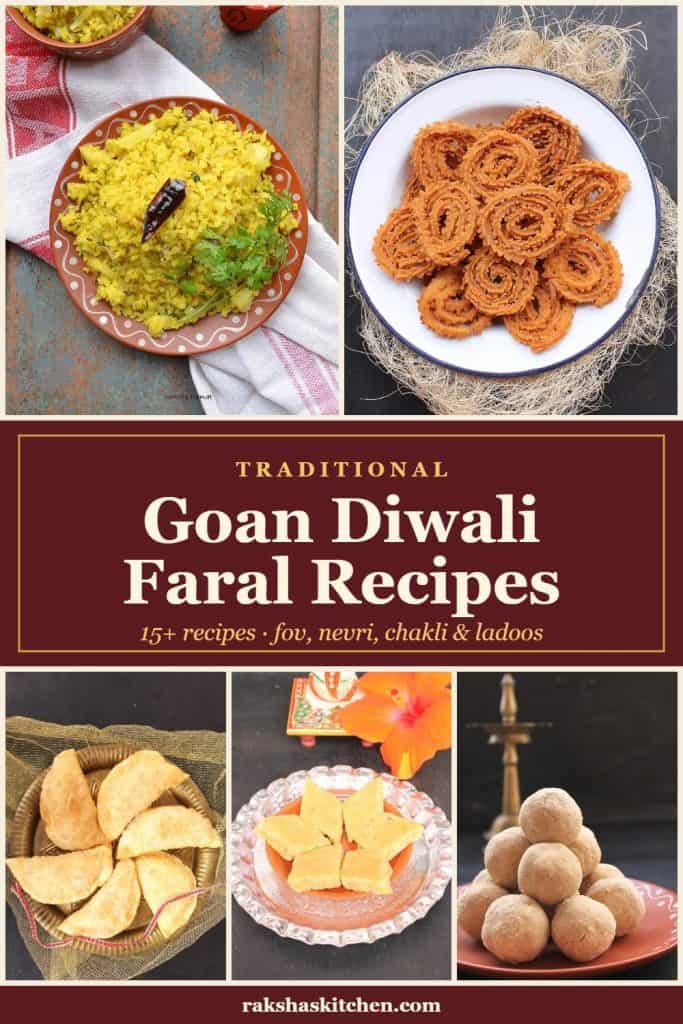
This page brings together all my traditional Goan Diwali recipes in one place. There are the fov we eat on Diwali morning, the sweets my mother-in-law taught me, and the snacks I make days in advance and store in jars. Every recipe is tried and tested in my kitchen, with step-by-step instructions.
In this post:
- How Goa celebrates Diwali
- Goan Diwali fov (poha) recipes
- Goan Diwali sweets
- Savoury Diwali snacks
- A simple Goan Diwali morning menu
- Make-ahead tips
- Frequently asked questions
How Goa celebrates Diwali
In most of India, Lakshmi Puja is the biggest day of Diwali. In Goa, the biggest day is Narak Chaturdashi, the day before.
For weeks before the festival, young people in every village and town build huge effigies of the demon Narkasur from paper, straw and paint. On the night before Diwali, the effigies are paraded through the streets with music and crackers. Before dawn, they are set on fire, marking Lord Krishna’s victory over Narkasur and the triumph of good over evil.
At home, the morning starts with an abhyanga snan, a bath with fragrant oil and ubtan. Then each person crushes a small bitter fruit called karit under their foot, a symbol of crushing Narkasur, and tastes a tiny bit of its bitterness. After the bitterness comes the sweetness: the whole family sits down to a breakfast of fov.
The celebrations carry on through the five days of Diwali:
- Dhanteras/Dhantrayodashi – the faral making is in full swing
- Narak Chaturdashi – Narkasur burning and the fov breakfast
- Lakshmi Puja – puja in homes and shops in the evening
- Padwa – the new year begins, with a festive lunch
- Bhaubeej – sisters perform aarti for their brothers and serve them sweets
Why fov (poha) is made on Goan Diwali
Diwali falls just after the rice harvest in Goa. Traditionally, fov was made from the freshly harvested paddy, so eating it on Diwali morning is a way of celebrating the new crop and thanking nature for it.
Fov is also wonderfully easy to share. Families visit relatives and neighbours on Diwali morning, and every home serves its own fov. Making five or more varieties is a matter of pride in many Goan households.
Goan Diwali fov (poha) recipes
If you want to make the full spread, start with my 5 Types of Poha for Diwali (Goan Fov) post. It shows how to plan and make all five on the same morning.
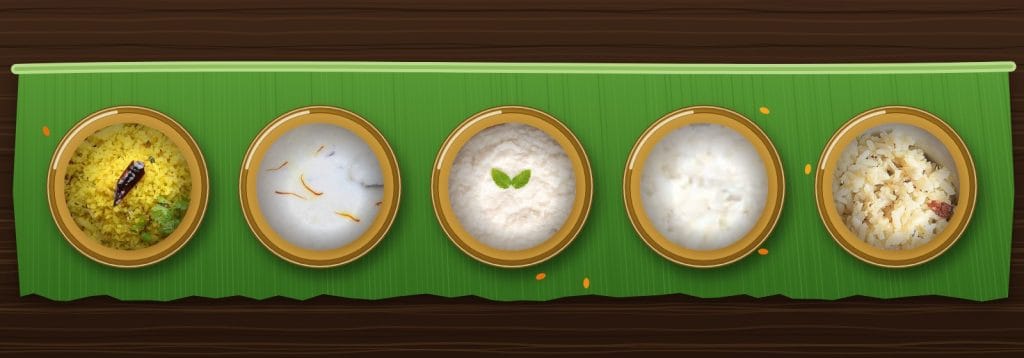
- Godanche Fov – Poha with jaggery, coconut and cardamom. Sweet, simple and the one children love most.
- Bataat Fov – Savoury potato poha with onion, green chillies and a fresh tempering.
- Dhaiyanche Fov – Poha soaked in curd and seasoned. Cooling and light after the sweets.
- Doodanche Fov – Poha in sweetened milk. Mild and comforting.
- Nalla Rosanche Fov – Poha in coconut milk with jaggery. Rich, creamy and very Goan.
Serve the fov with Goan Chana Ross, a spiced black chickpea curry in coconut gravy. Its heat balances the sweet fov perfectly, and no Goan Diwali breakfast feels complete without it. Add a spoon of Ambadyache Raite (hog plum chutney) on the side. It is sweet, tangy and mildly spicy, made with green hog plums, coconut and jaggery, and is a traditional part of the Goan Diwali breakfast.
Goan Diwali sweets
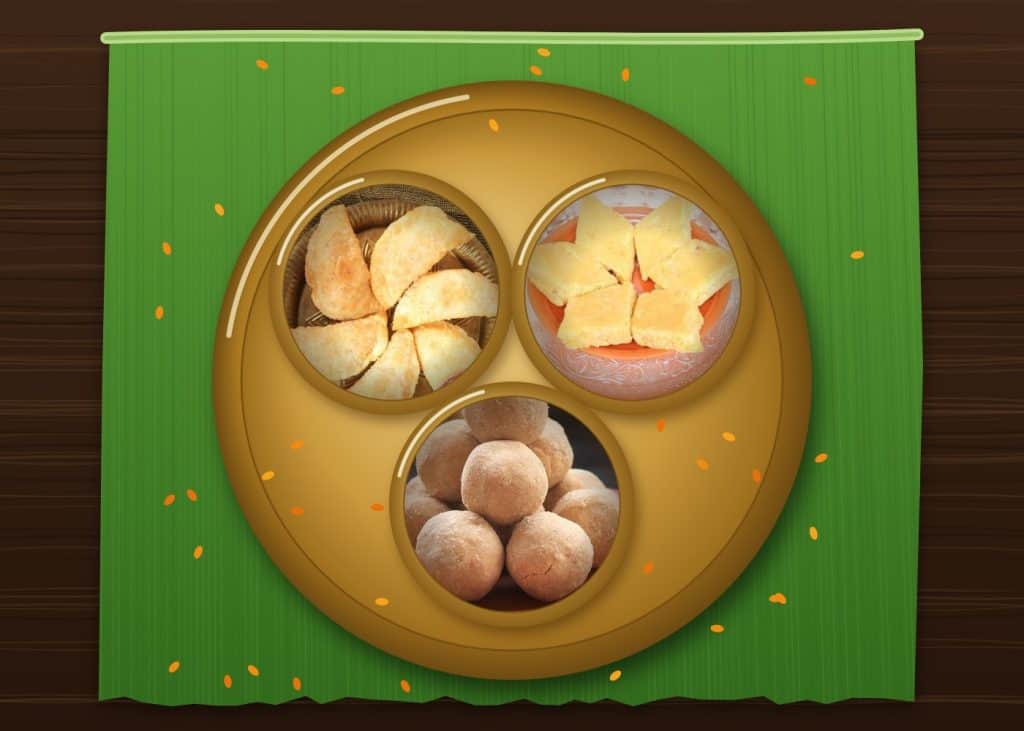
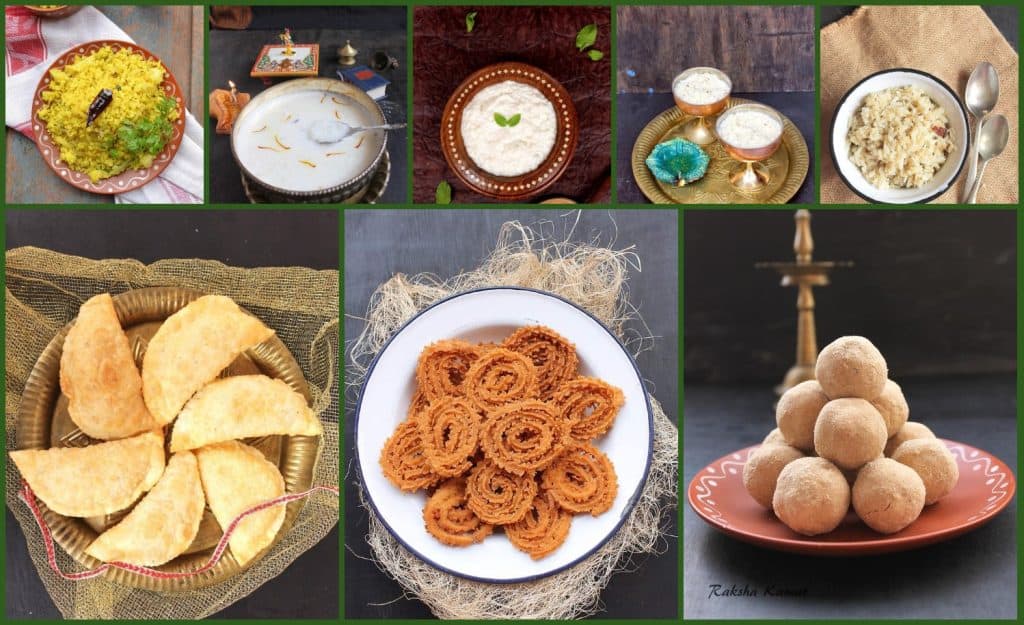
- Goan Nevri (Karanji / Gujia) – Crisp, half-moon pastries stuffed with coconut, jaggery and cardamom. Nevri is the star of Goan faral, and the box is usually empty long before Diwali ends.
- Chana Dal Kapa (Chana Dal Burfi) – Also called doce. I learnt this from my mother-in-law, who has made it for every festival for years. It needs only chana dal, sugar, coconut and cardamom, with no milk or khoya. It keeps well, so I make it in advance for Bhaubeej too.
- Wheat Flour Ladoo (Pityache Ladoo) – My mother-in-law’s signature ladoos, made with roasted atta, ghee, sugar and cardamom. In Goa, they are wrapped in colourful paper called foal and handed out to family and guests.
- Mangane (Goan Chana Dal Kheer) – A traditional Konkani sweet of chana dal and sabudana cooked in coconut milk and jaggery.
- Moogache Ladoo – Wholesome ladoos made with roasted whole moong and jaggery. A healthier sweet with no refined sugar.
- Coconut Burfi – Soft, melt-in-the-mouth squares made with very few ingredients.
- Lauki Ka Halwa (Bottle Gourd Halwa) – Bottle gourd slow-cooked in milk with ghee and dry fruits. Lovely served warm after the festive lunch.
- Rice Kheer (Goan Rice Payas) – Creamy rice pudding, made the Goan way.
- Goan Bottle Gourd Kheer – A light kheer with grated bottle gourd.
- Vermicelli Kheer (Shevayachi Kheer) – Quick to make and always a crowd-pleaser.
- Banana Halwa (Kelyacho Halwo) – A Goan halwa made with ripe bananas.
- Rabdi – Thick, slow-cooked sweetened milk. Perfect for the Lakshmi Puja dinner.
Savoury Diwali snacks
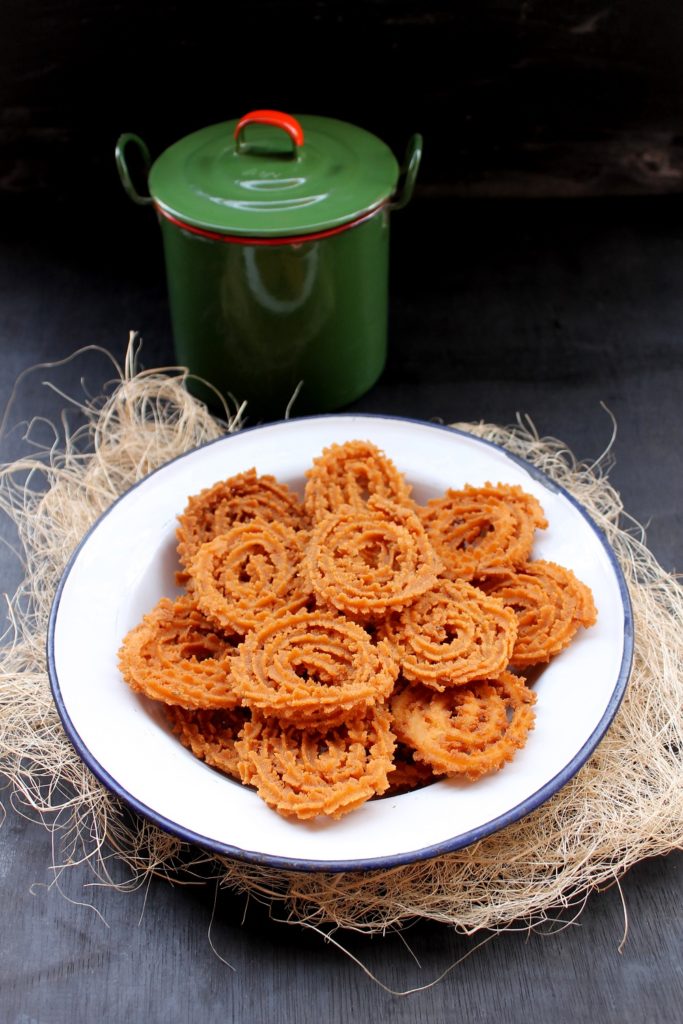
- Rice Flour Chakli (Chakri / Murukku) – Crunchy spirals made with rice flour. They stay crisp for days in an airtight jar, so they are perfect for serving guests all through Diwali.
- Bataat Fov and Goan Chana Ross – The savoury half of the Diwali breakfast, for anyone who prefers spice to sweet.
A simple Goan Diwali morning menu
If this is your first time making a Goan Diwali breakfast, you don’t need to make everything. This menu covers the essentials:
- Fov: Godanche Fov (sweet), Bataat Fov (savoury), Rosanche fov (sweet) and Dhaiyanche Fov (cooling)
- One curry: Goan Chana Ross
- One chutney: Ambadyache Raite
- One sweet: Nevri or Mangane
- For guests through the day: Chakli, Chana Dal Kapa and Wheat Flour Ladoo
Make-ahead tips
- 3–5 days before: Make nevri, chakli, chana dal kapa, wheat flour ladoo and coconut burfi. Store them in airtight jars once they cool completely.
- The night before: Grate the coconut, extract the coconut milk and keep it in the fridge. Soak the white chickpeas for the chana ross.
- On Diwali morning: Make the fov fresh. Poha softens and loses its texture if it is made too early.
- On the day: Make kheer, mangane and lauki halwa fresh, as milk-based sweets taste best on the day they are made.
Frequently asked questions
What food is eaten on Diwali in Goa? The Goan Diwali breakfast centres on fov (poha) made in several sweet and savoury ways, served with chana ross and ambadyache raite. Sweets like nevri, chana dal kapa, wheat flour ladoo and mangane are made for the festival and shared with family and neighbours.
Why is poha made on Goan Diwali? Diwali comes just after the rice harvest in Goa, and fov was traditionally made from the new paddy. Eating it on Diwali morning celebrates the new crop, and it is easy to make in large quantities to share with visitors.
What is Narak Chaturdashi, and how is it celebrated in Goa? Narak Chaturdashi is the day before Lakshmi Puja and the most important day of Diwali in Goa. Huge Narkasur effigies are burnt before dawn, families take an early oil bath, crush the bitter karit fruit underfoot, and then sit down to a breakfast of fov.
What is faral? Faral is the collection of sweets and savoury snacks made at home for Diwali, such as nevri, chakli, ladoos and burfi. It is made in large batches, stored in jars, and served to guests or exchanged with neighbours.
Which Goan Diwali sweets can I make in advance? Nevri, chana dal kapa, wheat flour ladoo, coconut burfi and moogache ladoo keep well for several days in airtight containers. Kheer, mangane and halwa are best made on the day.
Can I make Goan Diwali sweets with jaggery instead of sugar? Yes. Godanche fov, nevri, mangane and moogache ladoo are traditionally made with jaggery. For lauki halwa, you can also replace sugar with jaggery.
I hope these recipes help you bring a little bit of Goa to your Diwali table this year. If you try any of them, leave a comment and a rating on the recipe, or tag @rakshaskitchen on Instagram. I love seeing your Diwali faral!
Happy Diwali from my kitchen to yours!
Pin this post on Pinterest so you can find all the recipes again next Diwali.


Leave a Reply