
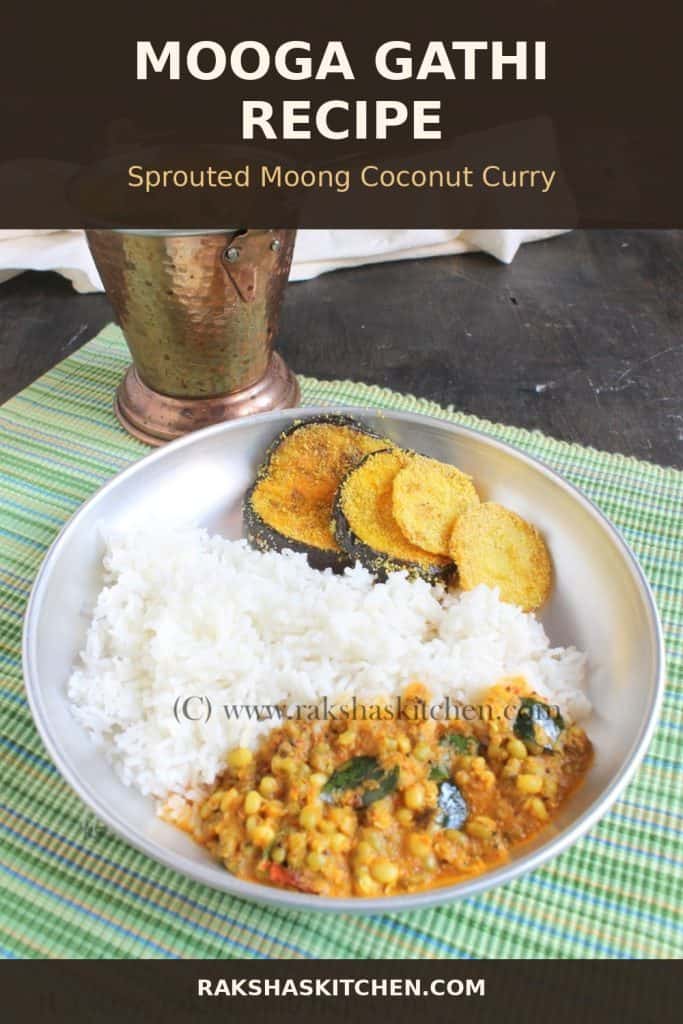
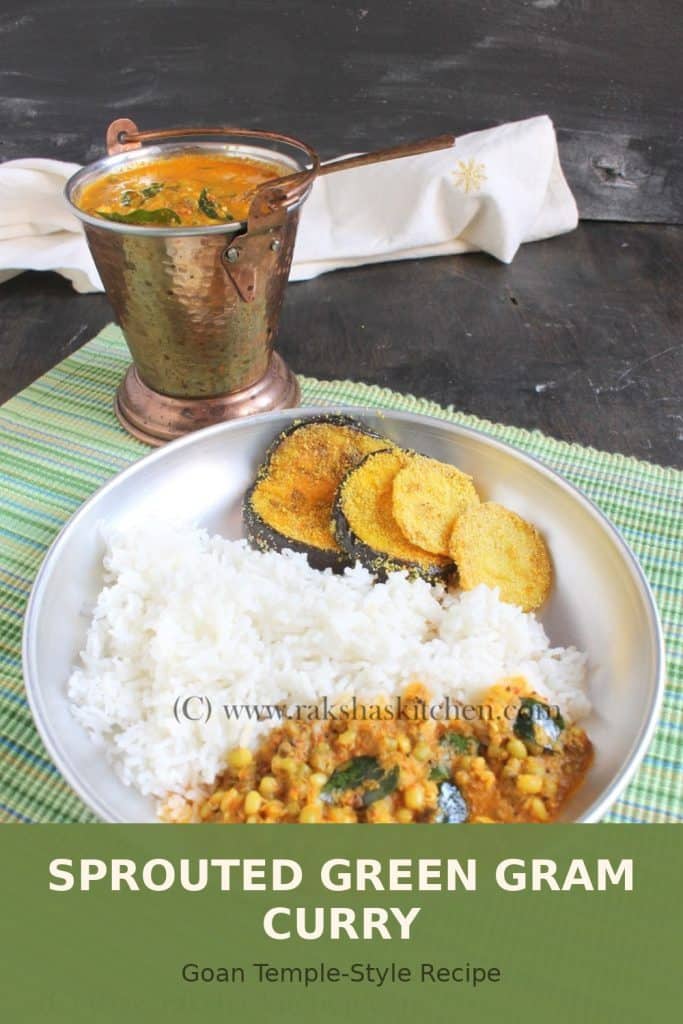

Mooga Gathi — also spelled Moong Gathi, Muga Gathi, or known in some households as Mooga Ghashi — is a traditional Goan dish most often served in temples. Sprouted green gram (moong) simmers in a tangy, coconut-based gravy, finished with a mustard seed and curry leaf tempering. It’s a completely no onion, no garlic pure vegetarian curry, making it a staple for festivals, poojas, and religious observances.

Why Is It Called “Gathi”?
“Gathi” (also transliterated as “ghashi”) refers to a style of coconut-based curry common across Konkani and Goan households, closely related to the “ghashi” curries found in neighboring Mangalorean cuisine. Different families and regions season it slightly differently — some, like a reader from Sreelatha’s family, skip the jaggery entirely and finish it with an onion tadka instead, calling it Mooga Ghashi. In Raksha’s own household, a similar coconut-based preparation is called Tonak. These naming differences reflect the wonderfully varied regional Konkani cooking traditions rather than one “correct” version — the coconut-and-spice gravy base is what ties them all together.
Ingredients for Mooga Gathi
- Sprouted green gram (moong) – the star ingredient. Fresh sprouts add texture and a subtle nuttiness that dried moong lacks.
- Coconut, freshly grated – forms the base of the gravy.
- Black peppercorns, dry red chilies, coriander seeds – ground together with the coconut for depth and gentle heat.
- Turmeric powder – for color and earthy flavor.
- Tamarind – adds tang that balances the sweetness from jaggery.
- Jaggery – for a touch of sweetness; some regional variations skip this and use an onion tempering instead.
- Curry leaves, mustard seeds, asafoetida – the tempering (tadka) that finishes the dish with aroma.
How to Sprout Green Gram at Home
- Soak green gram (moong) in water overnight.
- The next day, drain the water completely.
- Cover the moong in a strainer or muslin cloth and leave it at room temperature.
- By the following day, sprouts will begin to appear.
- Rub the sprouted moong gently between your hands to remove the loose peels.
How to Make Mooga Gathi (Step-by-Step)
Step 1: Cook the Sprouted Moong
Boil the sprouted green gram in 2 cups of water. Drain, but keep the water aside — it can be added back to thin the gravy later.
Step 2: Grind the Gravy
Grind grated coconut with coriander seeds, turmeric powder, red chilies, tamarind, and peppercorns into a smooth paste.
Step 3: Combine and Simmer
Heat a kadai, pour in the ground gravy, and add the boiled sprouts. Add ¾ cup water (ideally the reserved moong-cooking water) to thin the gravy to your preference.
Step 4: Sweeten
Add grated jaggery and stir well.
Step 5: Simmer
Let the curry simmer for 10 minutes, then switch off the heat.
Step 6: Temper and Finish
In a small tempering pan, heat oil, add mustard seeds, and once they splutter, add asafoetida and curry leaves. Pour this tempering over the curry and cover immediately to trap the aroma.
Troubleshooting: What If the Gravy Turns Out Too Watery?
If your mooga gathi ends up thinner than you’d like, either boil a bit more sprouted moong and stir it into the curry, or mix in a small amount of wheat flour to thicken the gravy without changing the flavor significantly.
Serving Suggestions
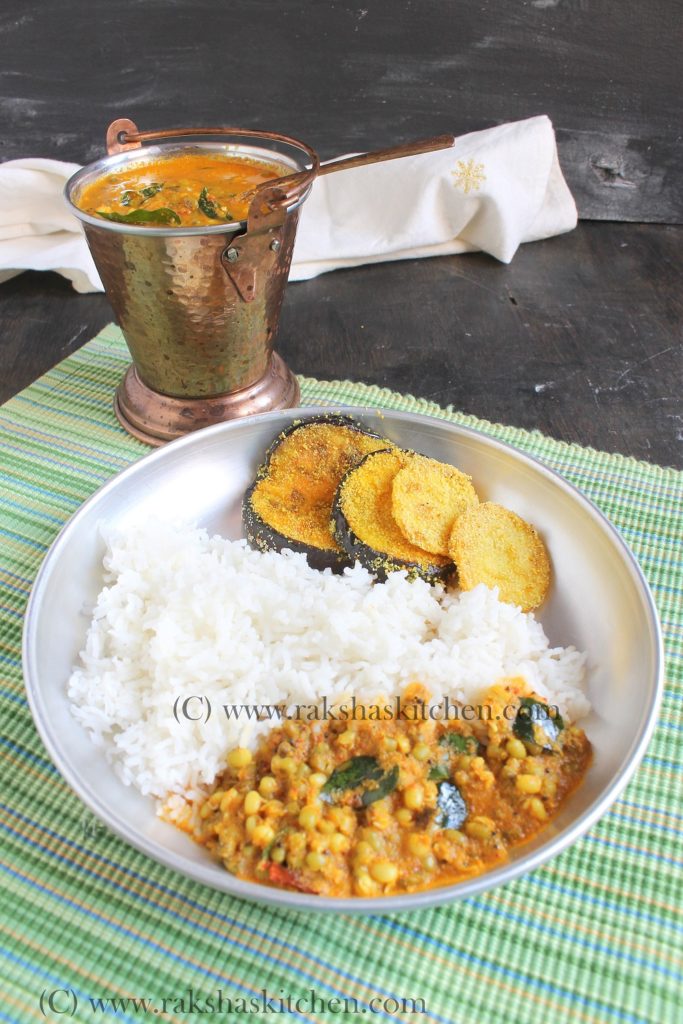
Mooga Gathi is traditionally served with poori, especially during temple functions and religious occasions, though it’s equally good spooned over hot steamed rice. Pair it with a simple stir-fried vegetable side for a complete no onion, no garlic meal — it’s especially fitting for Ganesh Chaturthi or Krishna Janmashtami spreads.
Health Benefits of Sprouted Moong
Sprouting green gram increases its digestibility and nutrient availability. Moong sprouts are a good source of plant protein and provide vitamins and minerals that support heart health and may help manage cholesterol levels as part of a balanced diet.
Frequently Asked Questions
Why is it called “gathi”?
Gathi (or ghashi) refers to a coconut-based curry style common in Konkani and coastal Karnataka cooking. It describes the preparation method — coconut ground with spices into a gravy — rather than one single fixed recipe, which is why you’ll find slight variations across different families and regions.
What’s the difference between Mooga Gathi, Mooga Ghashi, and Tonak?
These are largely regional and family naming variations for closely related coconut-based sprout curries. Some versions include jaggery and skip onion entirely (the traditional temple-style version in this recipe), while others, like Mooga Ghashi in some households, use an onion tempering instead of jaggery.
What if my mooga gathi turns out too watery?
Boil a little extra sprouted moong and stir it in, or add a small amount of wheat flour to the curry to thicken the gravy without significantly altering the flavor.
Can I make this without jaggery?
Yes — some traditional variations skip jaggery entirely, occasionally replacing the sweetness balance with an onion tempering instead. The tamarind’s tang still comes through either way.
How long does it take to sprout green gram at home?
Typically about 24–48 hours total: an overnight soak, followed by roughly a day at room temperature (covered) for visible sprouts to form.
Is this recipe suitable for fasting (vrat) days?
This is a pure vegetarian, no onion, no garlic recipe commonly made for religious occasions, though specific fasting rules vary by tradition and household — check your own observance’s specific requirements if cooking for a fasting day.
Related posts: Amlechi uddamethi, Khatkhate, Alsande usali , Dudyachi bhaji

Mooga Gathi
Equipment
- Mixer grinder
- Kadai / wok
Ingredients
- ½ cup sprouted green gram moong
- 6 tablespoons grated coconut
- 5 black peppercorns
- 3 Kashmiri dry red chilies
- 1 teaspoon coriander seeds
- 1 teaspoon turmeric powder
- 1 marble-sized ball of tamarind
- ½ teaspoon mustard seeds
- 8 –10 curry leaves
- Pinch of asafoetida
- 1 teaspoon grated jaggery
- 2 teaspoons oil
Instructions
- Sprout the green gram by soaking overnight, then draining and covering until sprouts appear. Rub gently to remove loose peels.
- Boil the sprouted green gram in 2 cups water. Drain, reserving the water.
- Grind coconut with coriander seeds, turmeric, red chilies, tamarind, and peppercorns into a smooth paste.
- Heat a kadai, add the gravy and boiled sprouts. Add ¾ cup water (preferably reserved moong water) to thin as needed.
- Add grated jaggery and stir well.
- Simmer for 10 minutes, then switch off heat.
- Temper mustard seeds, asafoetida, and curry leaves in oil, then pour over the curry and cover.
Video
Notes
Pin this recipe on Pinterest:



Love this. We make this too Raksha, but call it Mooga Ghashi. And we dont use jaggery, and we give onion tadka. – Sreelatha
Oh we call it Tonak 🙂
Looks testy! Photographs are very sharp !
thanks Shrikant
interesting Raksha, though the images looked like alsandi to me, need to get my eyes checked.
What if water becomes more in moong gathi, then what to do
Boil some more moong, and add in curry. or you can add little wheat flour in the curry to thicken it.
Why is it called gathi…? Any reason for this word.??
Thank You and God bless for sharing our Authentic Goan recipes. i will make for Ganesh Chathurthi and Panchami this year
Thanks for the comment 🙂