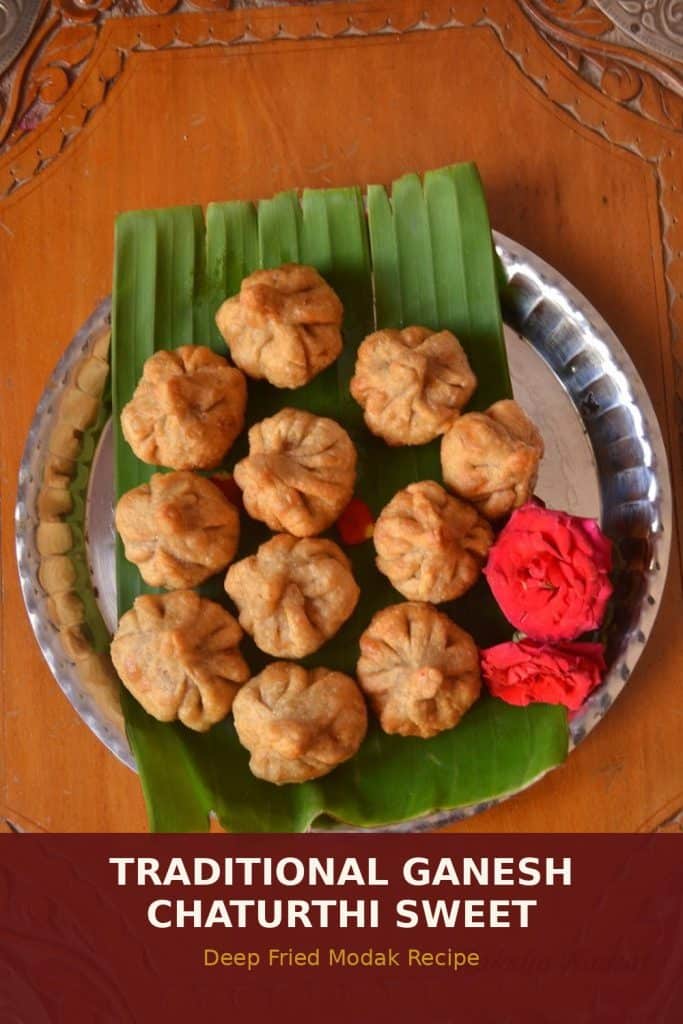
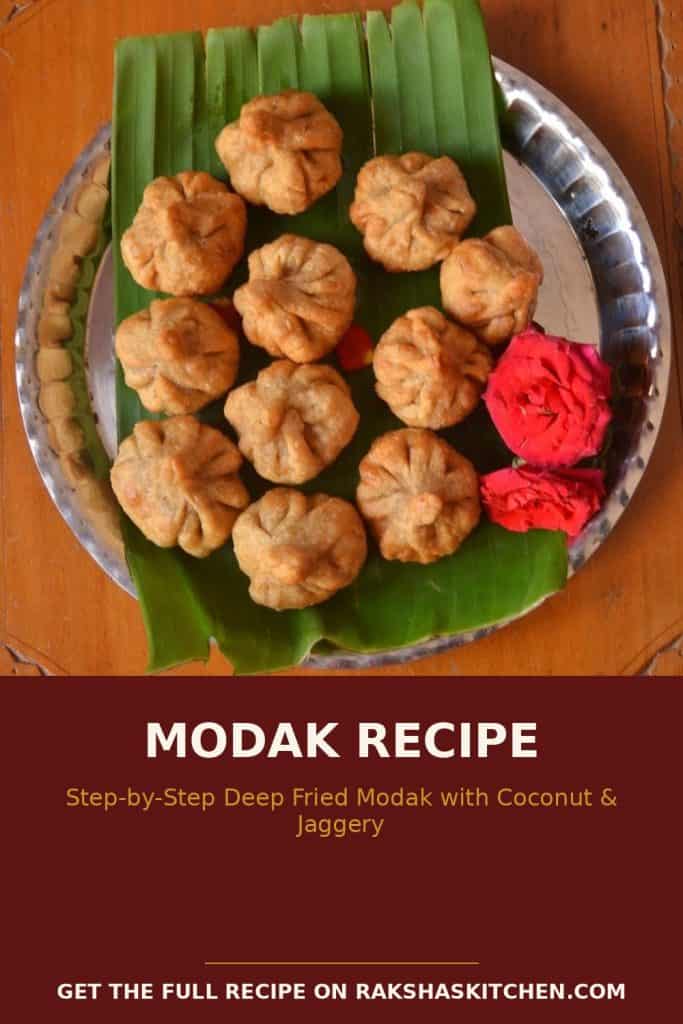
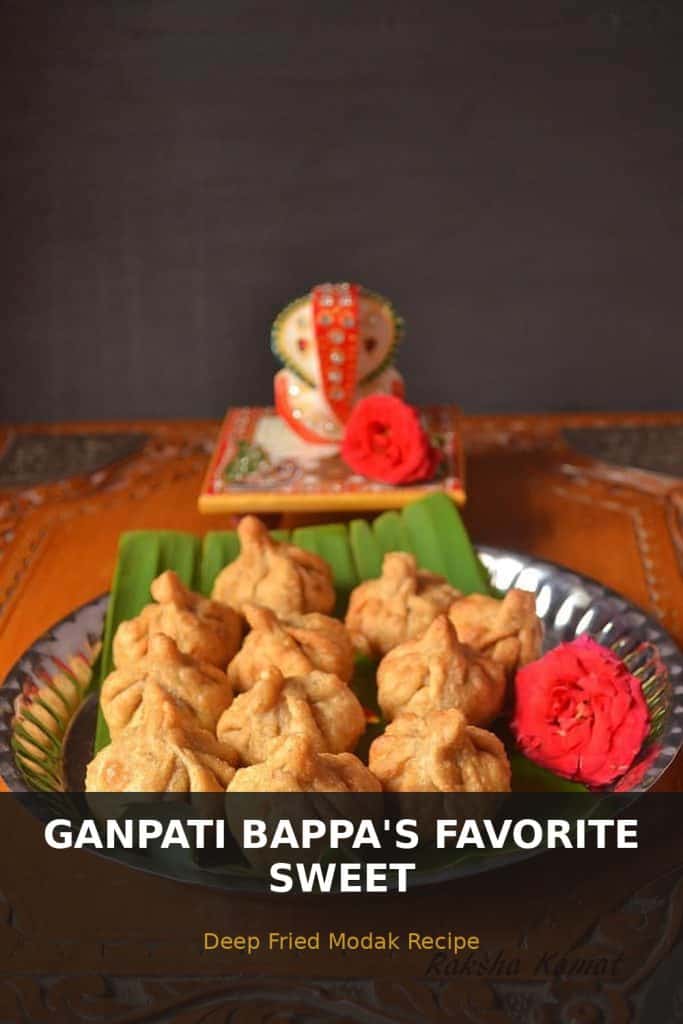
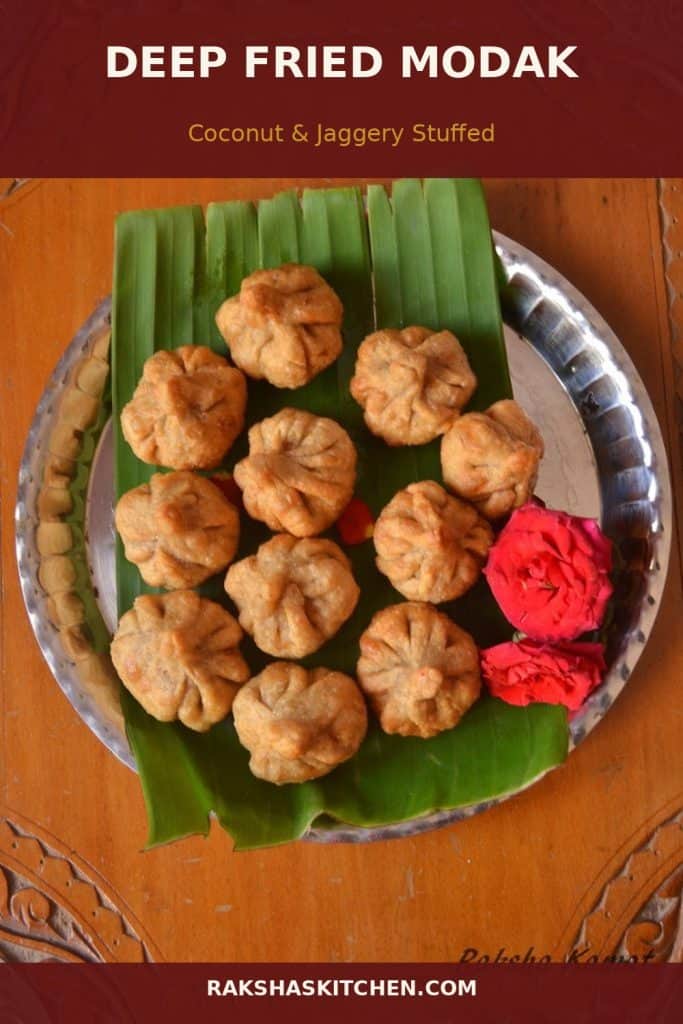
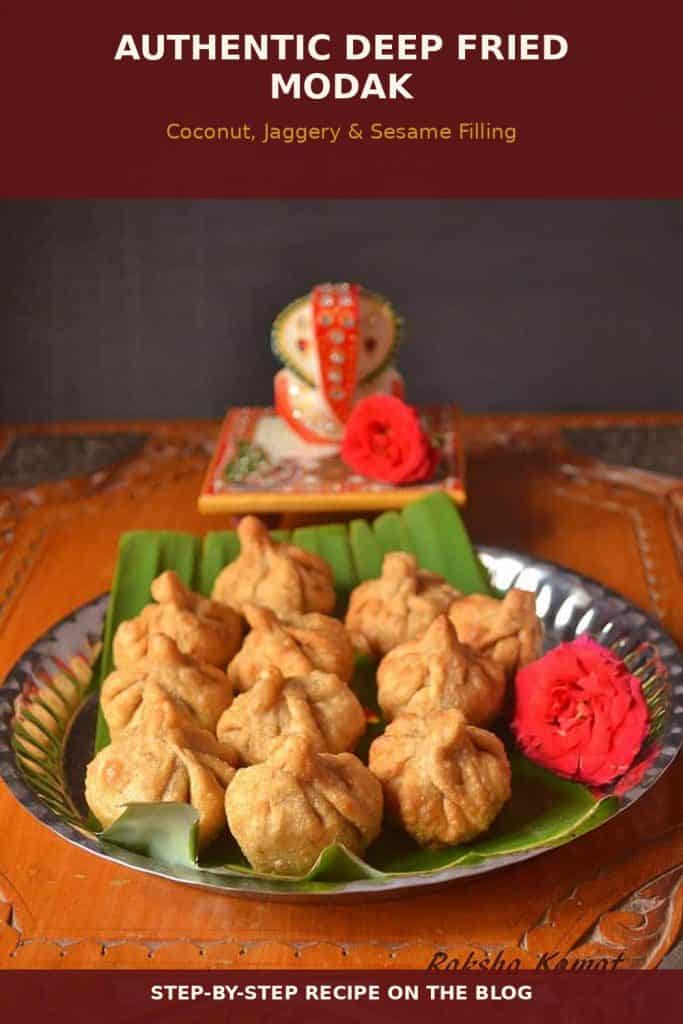
Ganesh Chaturthi is round the corner, and homes across Goa and India have started preparing sweets for the festival. Lord Ganesha’s favorite sweet is modak — an Indian dumpling that’s either deep fried or steamed — and this deep fried modak recipe, filled with freshly grated coconut, jaggery, sesame seeds, cashews, and cardamom, has been part of my Ganesh Chaturthi tradition for years.
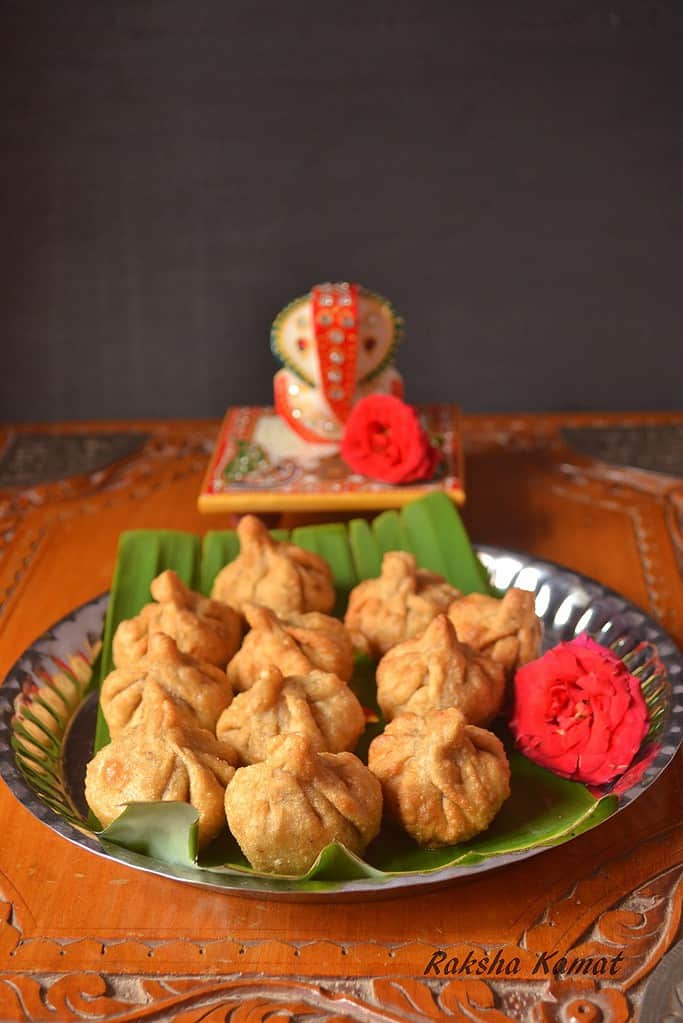
Unlike quicker modern twists like Mava Modak or Chocolate Rava Modak, this is the traditional, hand-shaped fried version — the one many families in Goa and Maharashtra grew up eating during Ganesh Chaturthi and Janmashtami as neivedyam.
Modak is Lord Ganesha’s favorite food, which is why he’s also known as Modakpriya. Traditionally, 21 modaks are offered as neivedyam to Lord Ganesha before being distributed as prasad. Fried modak can also be made for other occasions, like the monthly Sankashti Chaturthi.
Ingredients for Deep Fried Modak
For the outer coating:
- Whole wheat flour (atta) – forms the crisp outer shell.
- Oil – added to the dough for a light, crisp texture after frying.
- Water – for kneading to a semi-soft dough.
- Salt – balances the flavor of the outer coating.
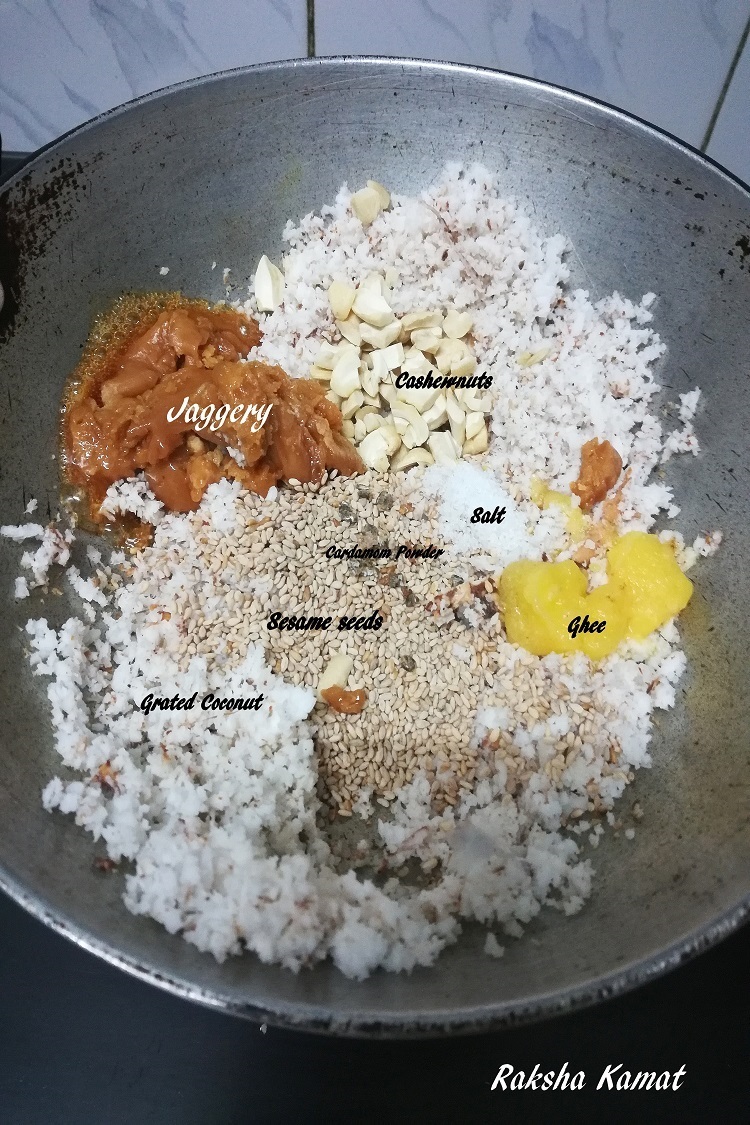
For the filling:
- Fresh grated coconut – the heart of the filling; adds natural sweetness and texture.
- Grated jaggery – traditional sweetener with a rich, caramel-like flavor.
- Roasted sesame seeds – add nuttiness and a subtle crunch.
- Crushed cashews – for bite and richness.
- Crushed cardamom – adds warm, festive aroma.
- Ghee – binds the filling and adds richness.
- A pinch of salt – balances the overall sweetness.
For frying:
- Oil – for deep frying until golden brown.
How to Make Deep Fried Modak (Step-by-Step)
Step 1: Make the Dough Mix whole wheat flour with water, oil, and salt. Add water little at a time, mixing with your fingers until you reach a semi-soft dough consistency. Cover and set aside for 30 minutes.
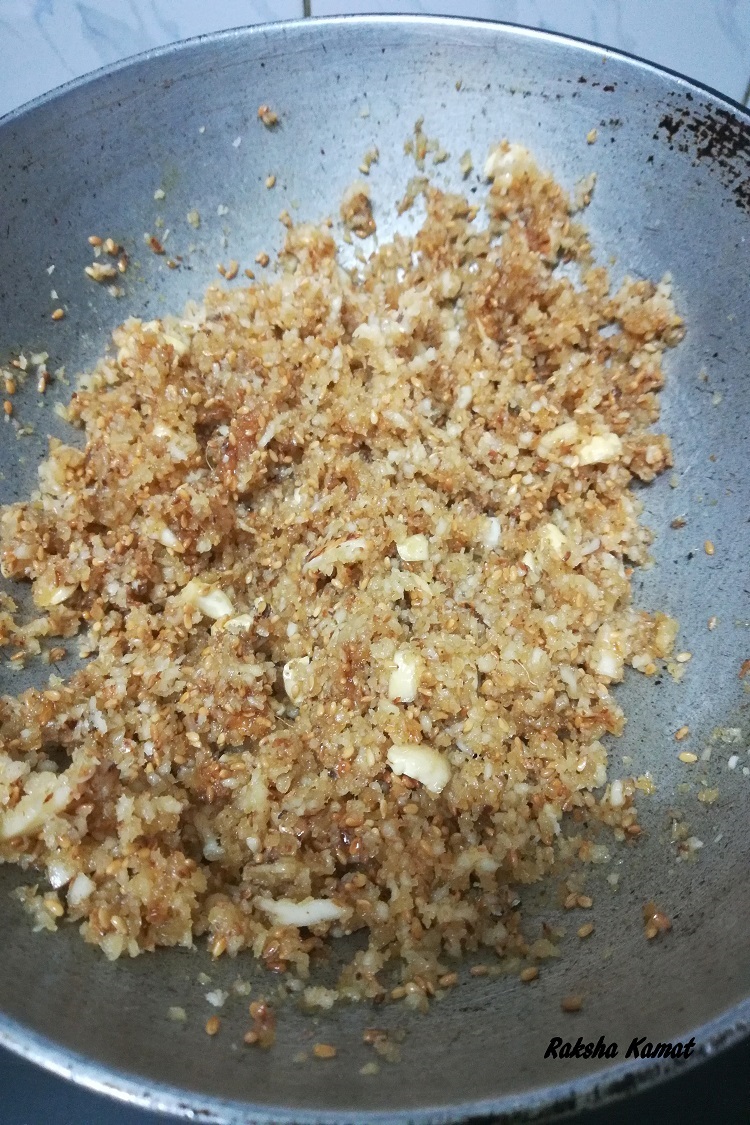
Step 2: Prepare the Filling While the dough rests, heat a kadai. Add grated coconut, grated jaggery, roasted sesame seeds, crushed cashews, crushed cardamom, ghee, and salt. Mix well on low flame, then let it cool.
Step 3: Shape the Modaks Make small balls out of the dough. 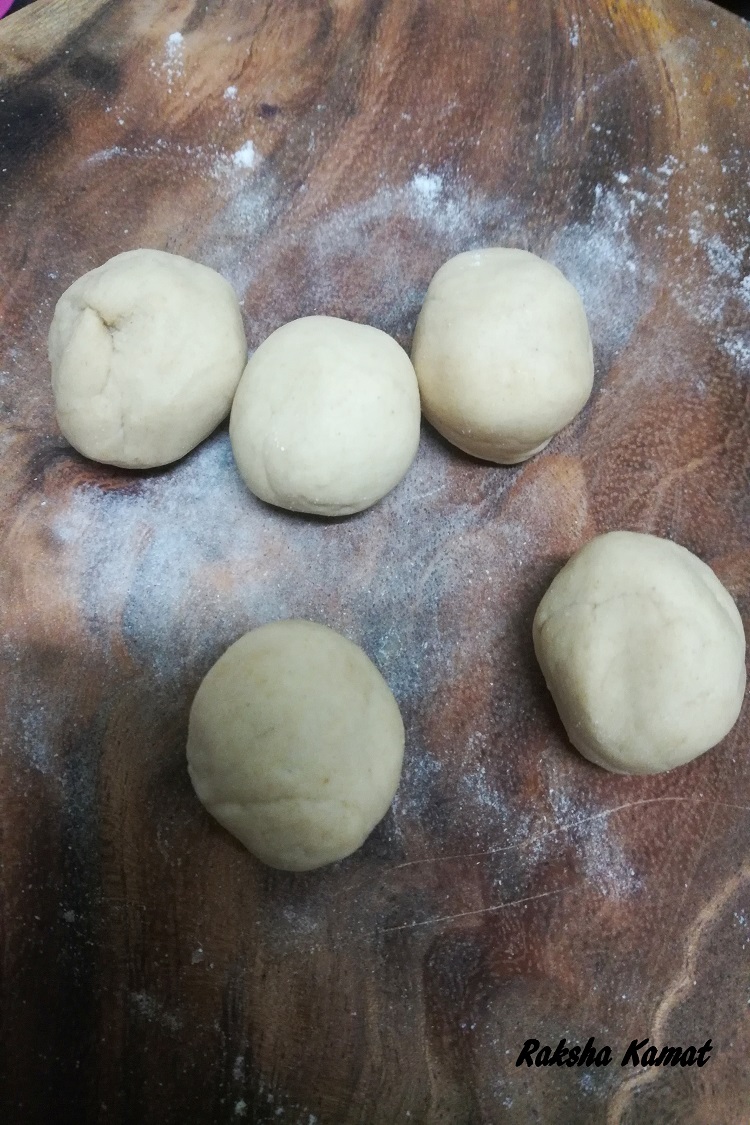
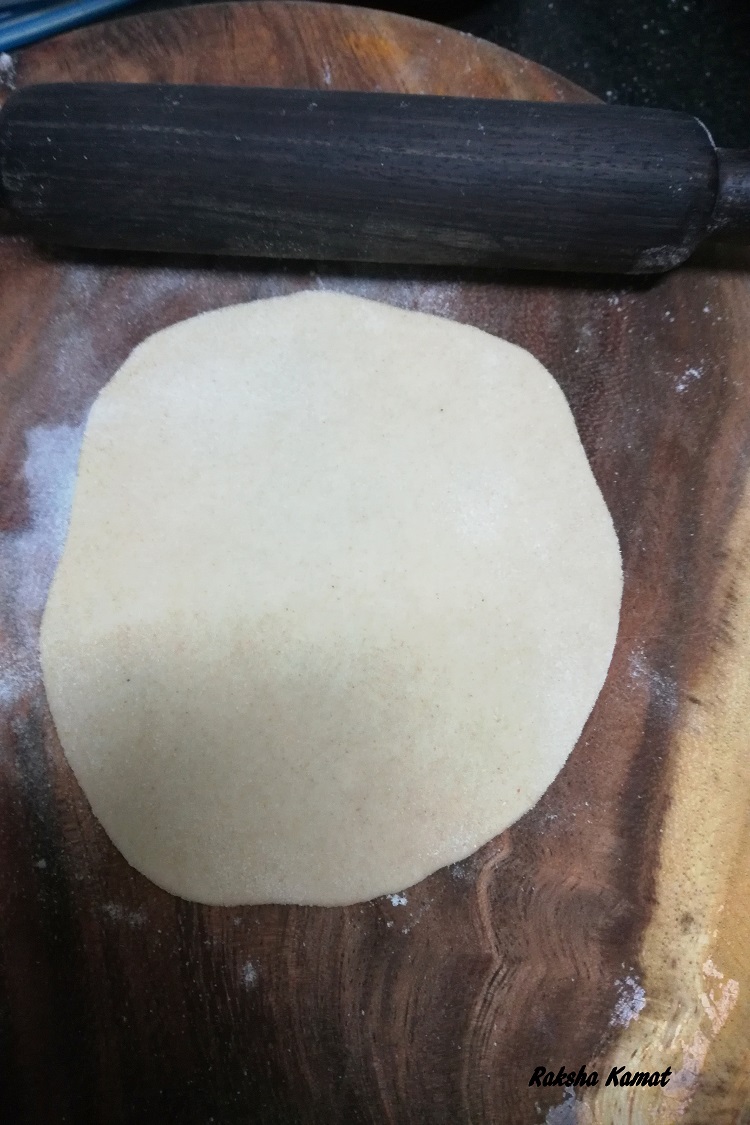
- Flatten each into a thin circle, about 4 inches in diameter.
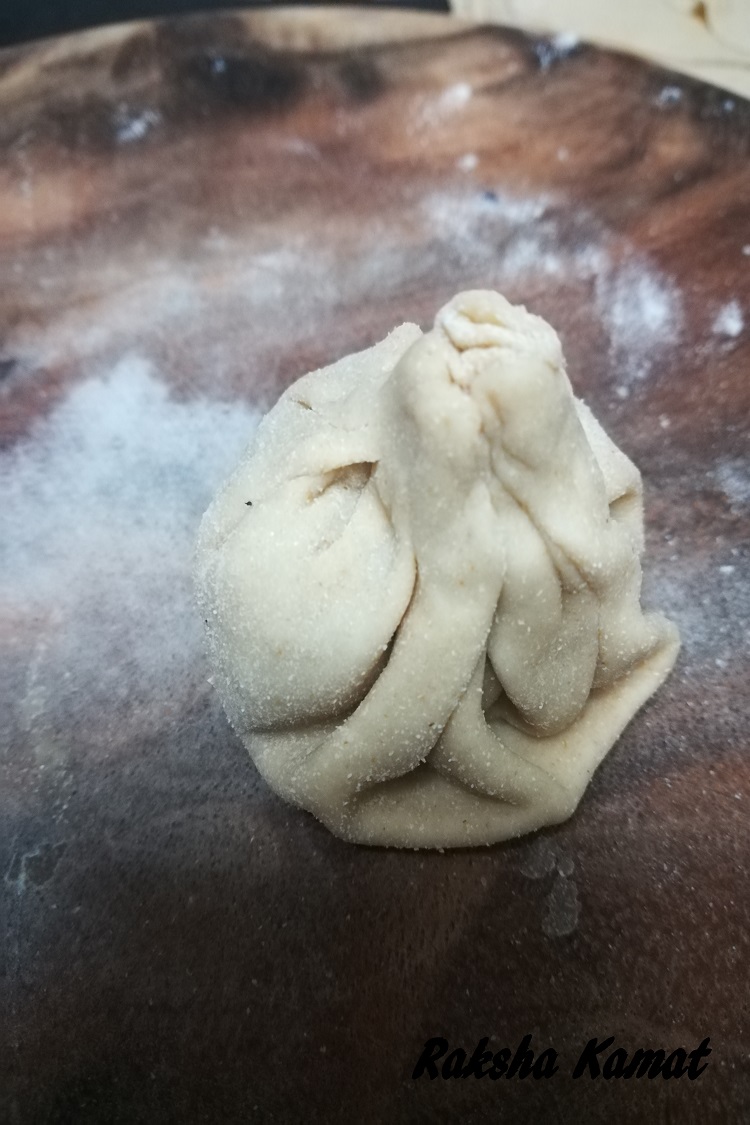
- Place a flattened circle in your palm, add a teaspoon of filling, then pinch and fold the edges.
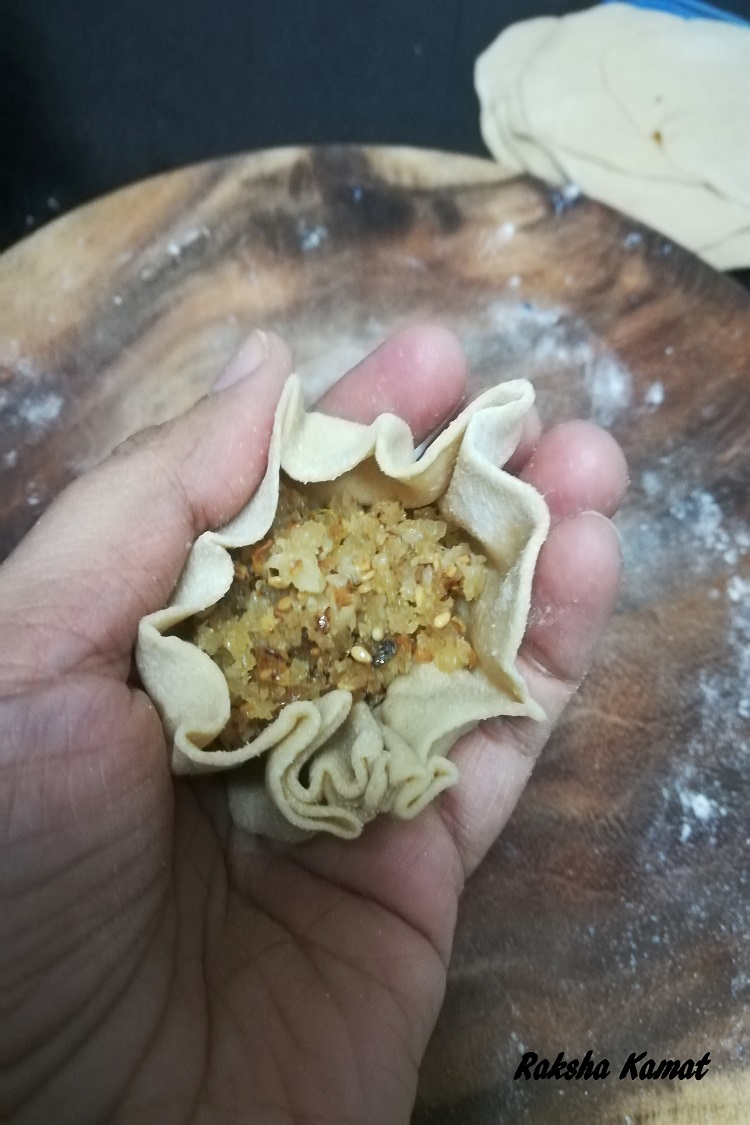
Step 4: Seal and Fry Bring all the folds together at the center and seal properly — this prevents the filling from leaking out during frying.
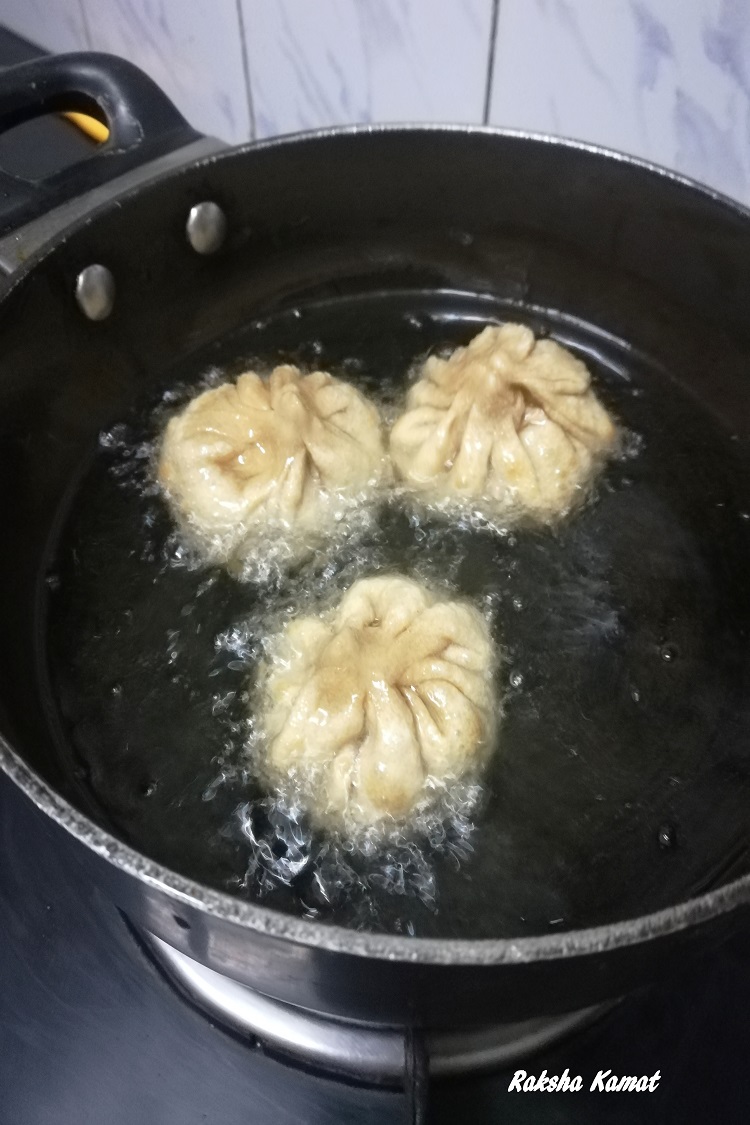
Heat oil in a kadai, and deep-fry the modaks in batches of 2–4 until golden brown.
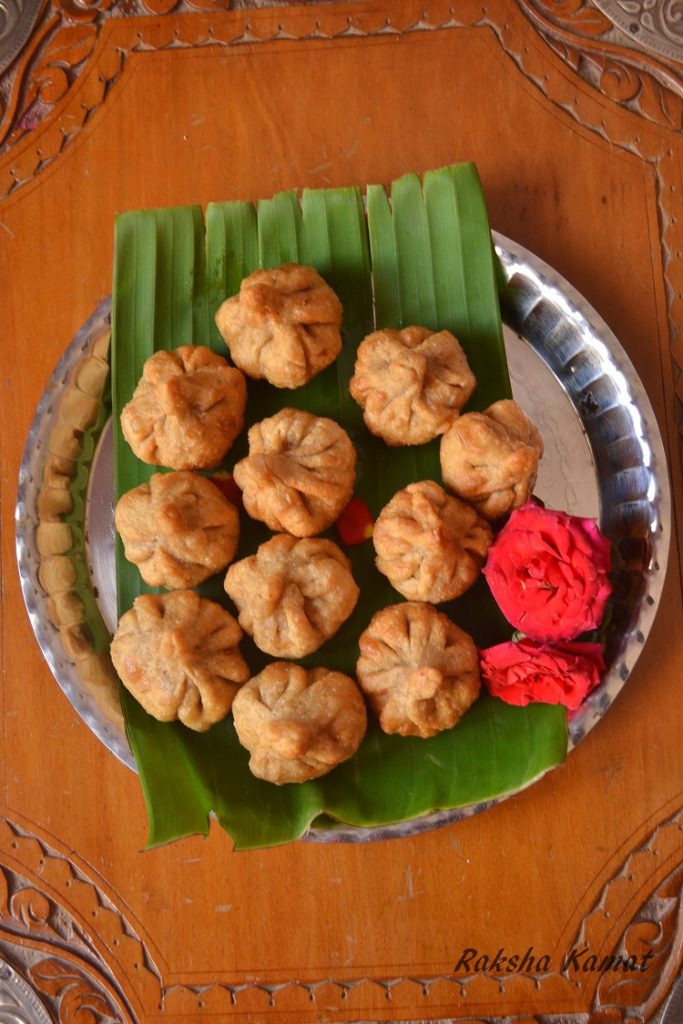
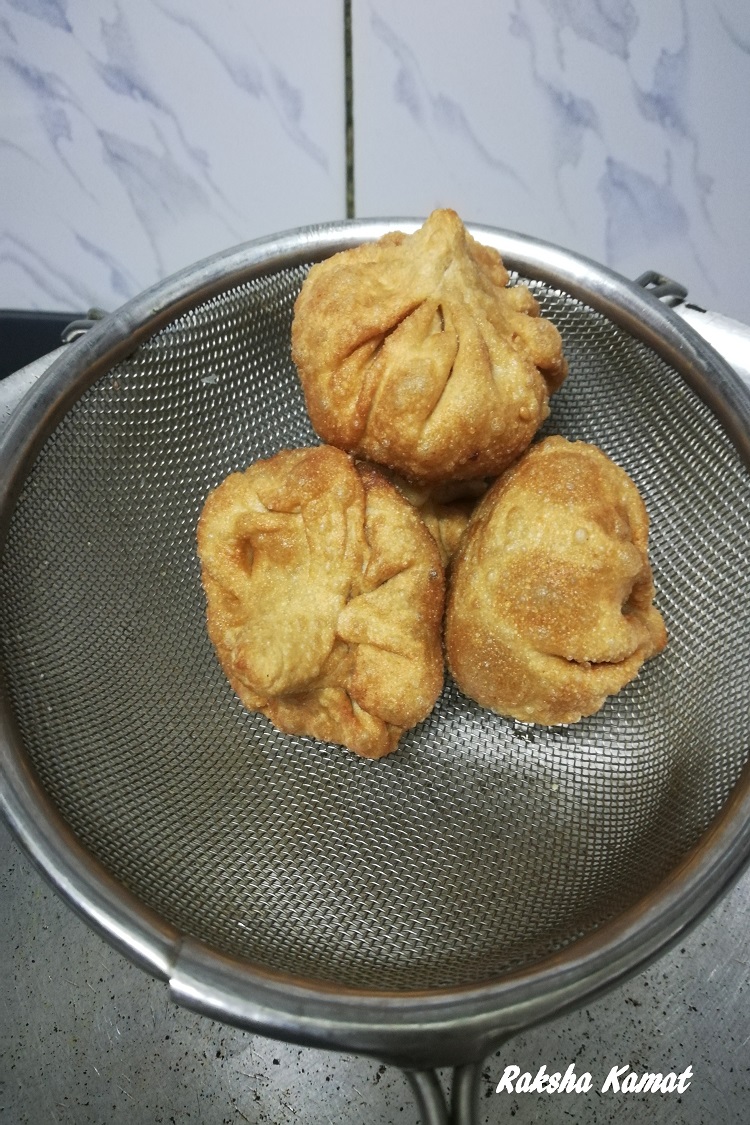
- Deep fried modaks ready.
Tips for Perfect Deep Fried Modak
- Sealing matters most — an improperly sealed modak will leak filling into the oil while frying. Take your time pinching and closing the folds.
- Don’t skip the resting time for the dough — it makes the wheat flour easier to roll and shape.
- Fry on medium heat — too hot and the outside browns before the inside cooks through; too low and the modaks absorb excess oil.
- No modak mould? No problem. This recipe is traditionally shaped entirely by hand, though a mould can help if you’re new to shaping modaks.
A Note on Ganesh Chaturthi Traditions
Various no-onion, no-garlic dishes are prepared in Goan homes during this festival — varan bhaat, amlechi uddamethi, puri, chana tonak, mooga gathi, toi, saar, patoli, shevyachi kheer, bhajjis, papad, and pickle. Celebrations typically last 1.5 days for Ganesh Chaturthi, with families keeping Ganesha for 1.5, 5, 7, 11, or 21 days depending on tradition. Sweets like chakri, ladoo, and nevri are often made in advance and shared with relatives and friends, sometimes sent to married daughters as part of “vaje” along with clothes, coconuts, lentils, and fruits.
Frequently Asked Questions
Can I steam deep fried modak instead of frying it? This particular filling and dough are designed for frying, which gives the outer shell its signature crisp texture. For a steamed version with a similar coconut-jaggery filling, try Ukadiche Modak, which uses a rice flour dough instead.
How long do deep fried modaks stay fresh? Stored in an airtight container, they keep well for about a week at room temperature, making them ideal for preparing in advance of the festival.
Can I make the filling without jaggery? You can substitute with brown sugar, though the flavor will be less caramel-like and more straightforwardly sweet. Jaggery is traditional for its distinct depth of flavor.
Why did my modak filling leak out while frying? This almost always comes down to sealing — make sure all the folds are brought together tightly at the center before frying. A gap in the seal lets oil in and filling out.
Can I prepare the dough or filling in advance? Yes — the filling can be made a day ahead and refrigerated. The dough is best made fresh, or at most a few hours ahead, and kept covered so it doesn’t dry out.
Deep Fried Modak (Indian Dumplings with Grated Coconut and Jaggery)
Ingredients
Ingredients — Outer Coating:
- 1 cup whole wheat flour atta
- 2 teaspoons oil
- Water as needed, for kneading
- ¼ teaspoon salt
Ingredients — Filling:
- 1 cup fresh grated coconut
- 2 tablespoons grated jaggery
- 2 tablespoons roasted sesame seeds
- 5 cashews crushed into small pieces
- 4 cardamom pods peeled and crushed
- 1 teaspoon ghee
- A pinch of salt
For frying:
- 2 cups oil
Instructions
- Mix whole wheat flour with water, oil, and salt to a semi-soft dough. Cover and rest for 30 minutes.
- Heat a kadai. Add grated coconut, jaggery, sesame seeds, cashews, cardamom, ghee, and salt. Mix on low flame, then cool.
- Make small dough balls and flatten each into a 4-inch circle.
- Place a circle in your palm, add filling, and pinch the edges into folds.
- Bring all folds together at the center and seal firmly.
- Heat oil in a kadai and deep-fry modaks in batches of 2–4 until golden brown.
Video
Notes
Pin this image on Pinterest.


Leave a Reply