
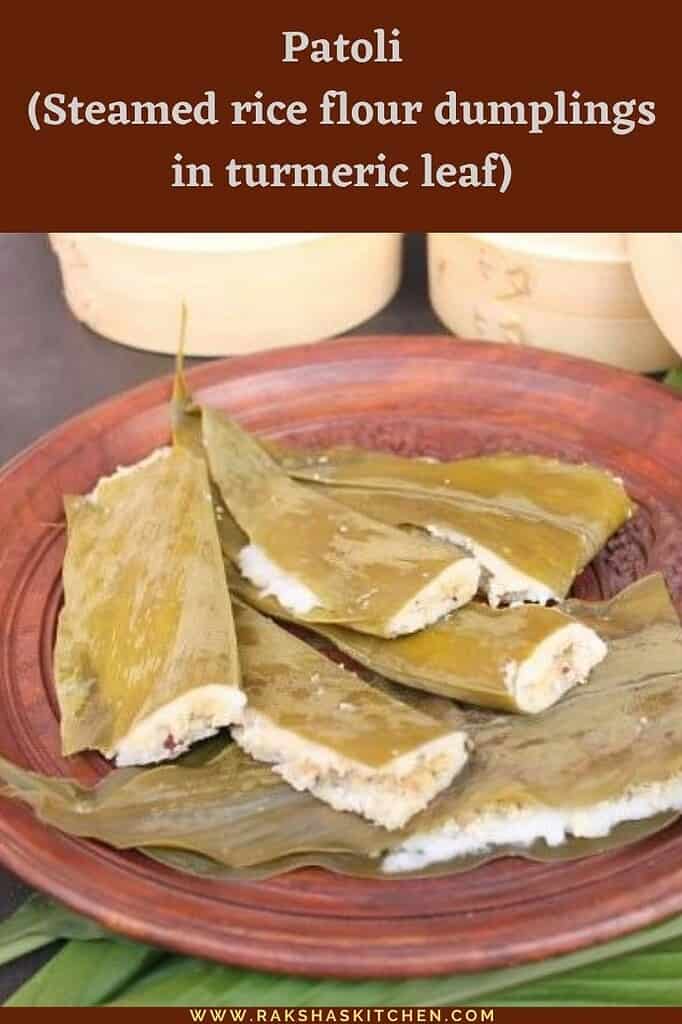
Patoli — also spelled Patoleo or Patolyo — are rice flour dumplings stuffed with sweet coconut, jaggery, and cardamom, wrapped in fresh turmeric leaves and steamed. This traditional Goan dish carries a fragrance no other wrapping can replicate as the turmeric leaves steam, their flavor seeps into the rice flour, giving patoli its signature aroma.
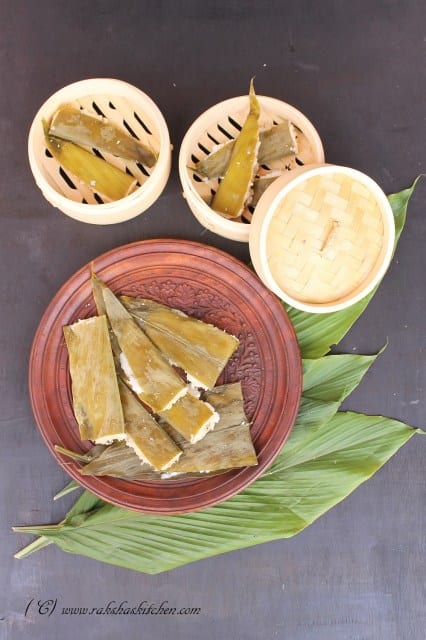
Patoli is closely tied to the calendar. Goan Hindus traditionally make it for Shravan Sunday, Nag Panchami, and Hartalika (the eve of Ganesh Chaturthi), while Goan Christians prepare it for the Feast of the Assumption on August 15 and Sao Joao. Shravan itself is an auspicious month that arrives with the monsoon, when turmeric leaves grow in abundance — which is exactly why this dish is so deeply linked to the season.
Making patoli is often a family affair. Spreading the rice flour dough over the turmeric leaf, adding the coconut-jaggery filling, sealing, and steaming — it’s a dish that naturally turns into teamwork in the kitchen.
Related posts: Puran poli, Modak, Nevri
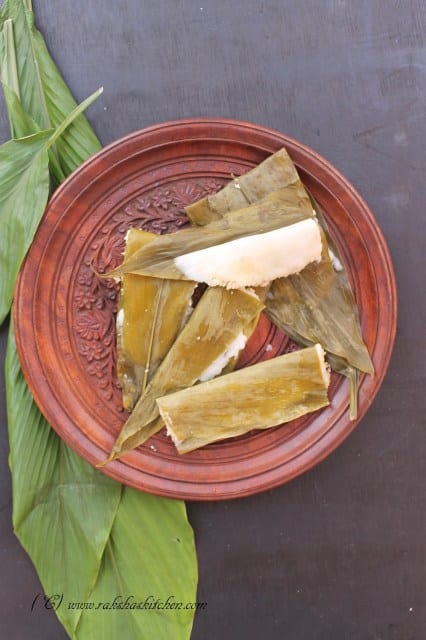
Ingredients for Patoli
- Turmeric leaves – the defining ingredient. There’s genuinely no substitute for the flavor fresh turmeric leaves impart during steaming.
- Rice flour – cooked into a dough and spread thinly over the leaf before filling.
- Coconut, freshly grated – forms the base of the sweet stuffing.
- Jaggery – traditionally palm jaggery, though sugarcane jaggery works well too and is what’s used in this recipe.
- Cardamom pods – crushed and added to the filling for a warm, festive aroma.
Where to Find Turmeric Leaves
Turmeric leaves can be hard to source outside Goa or parts of coastal India. If you can’t find fresh ones, jackfruit leaves or banana leaf are workable substitutes for the steaming wrap, though the flavor won’t come close to the real thing — turmeric leaf is what gives patoli its signature fragrance and taste.
If turmeric leaves are not available, you can make patolli in jackfruit leaves or banana leaf, but the taste will be no where close to making patoleo in turmeric leaves.
Ingredients to make patoleo recipe:
- Turmeric leaves: Fresh turmeric leaves are the star ingredient in making authentic patolli. There is no alternative to fresh turmeric leaves. You can make patolyo with jackfruit leaves, but taste will be compromised.
- Rice flour: Rice flour paste is applied to on the turmeric leaf before adding the coconut stuffing.
Coconut: Freshly grated coconut should be used in making these Goan patolyo. - Jaggery: Traditionally palm jaggery is used in making patolli. You can use sugarcane jaggery if palm jaggery is not available. I have used sugarcane jaggery in making this recipe.
- Cardamom pods: Cardamom pods adds earthy flavour to the recipe. Since it is made on a festive occasion, a cardamom pod is a must.
How to Make Patoli (Step-by-Step)
Step 1: Make the Rice Flour Dough Boil water, then add rice flour and salt gradually, mixing well with a spoon. Once it absorbs all the water, switch off the heat and let it cool slightly before mixing further on a plate.
Step 2: Prepare the Coconut-Jaggery Filling Heat a kadai, add grated coconut, grated jaggery, crushed cardamom pods, and a pinch of salt. Stir for 2–3 minutes until well combined, then switch off the heat and let it cool.
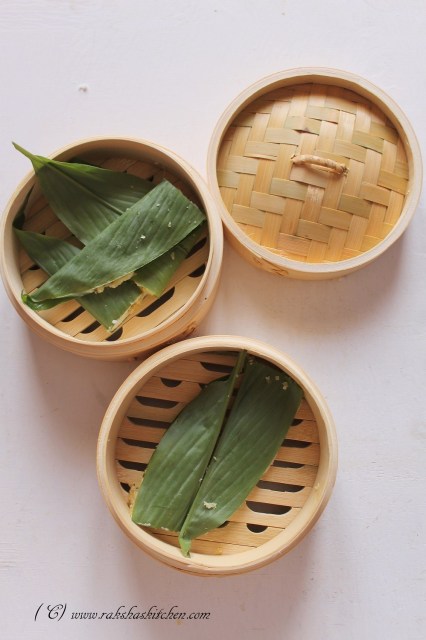
Step 3: Prepare the Leaves Wash the turmeric leaves and pat them dry.
Step 4: Assemble the Patoli Keep a small bowl of water nearby to dip your fingertips, since the rice dough gets sticky. Place a turmeric leaf on a plate and spread about 2 tablespoons of rice flour dough over the smooth inner side, leaving space near the edges for sealing.
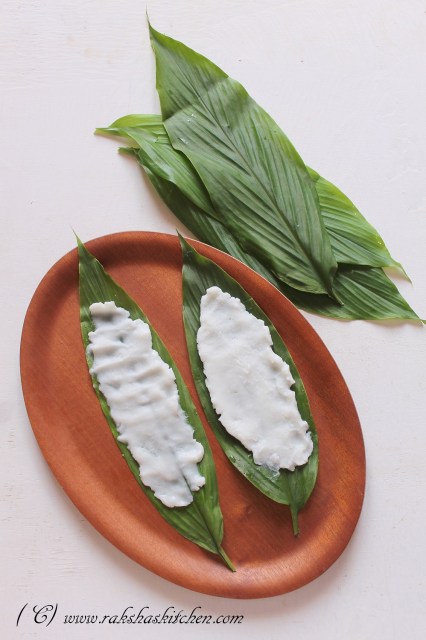
Step 5: Add the Filling Spread 1 teaspoon of the coconut-jaggery mixture over the dough. Avoid overfilling — you’ll need enough leaf edge left to seal properly. It’s fine if the edges stay slightly open; the goal is simply to steam the dumpling, not create an airtight seal.
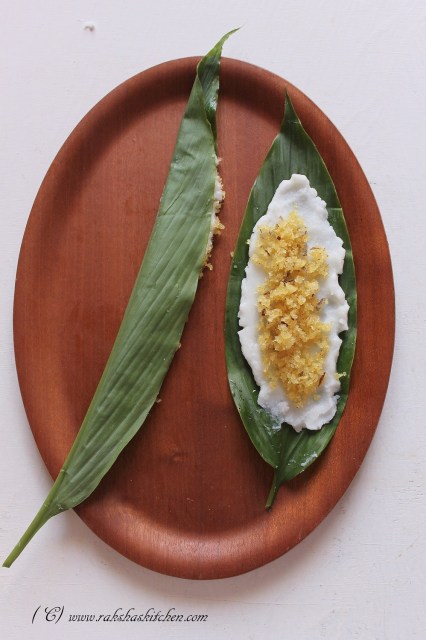
Step 6: Fold and Seal Bring the edges of the leaf together, similar to closing an envelope, and press gently. You can also fold it vertically if that’s easier. If the patoli are large, cut them in half before steaming.
Step 7: Steam Steam the wrapped dumplings for 20 minutes. Take a moment to enjoy the fragrance of turmeric leaves as they steam — it’s genuinely part of the experience.
Alternative Method
Some cooks soak rice overnight and grind it fresh the next day instead of using rice flour directly, following the same assembly process afterward. Patoleo can also be made using wheat flour instead of rice flour for a different take on the dish.
How to Serve Patoli
Serve patoli steaming hot, leaves still on. Peel back the turmeric leaf and eat the rice flour dumpling inside. It works equally well as a dessert after lunch or as an evening snack alongside a cup of tea.
Frequently Asked Questions
What’s the difference between Patoli and Modak? Both are festive coconut-jaggery filled dumplings, but patoli uses a flattened rice flour dough wrapped in turmeric leaf and steamed, while modak is shaped by hand (or in a mould) and can be either steamed or fried, without any leaf wrapping.
Can I make patoli without turmeric leaves? Yes, though the flavor will differ noticeably. Jackfruit leaves or banana leaf can work as a steaming wrap, but turmeric leaf is what gives patoli its distinctive fragrance and taste — there’s no true substitute for it.
Why is patoli made on specific festival days? Patoli is traditionally tied to the monsoon season (Shravan month), when turmeric leaves grow abundantly. It’s made for Shravan Sunday, Nag Panchami, and Hartalika by Goan Hindus, and for the Feast of the Assumption (August 15) and Sao Joao by Goan Christians.
Can I use wheat flour instead of rice flour? Yes, some versions of patoleo are made with wheat flour instead of rice flour, giving a slightly different texture while keeping the same coconut-jaggery filling and turmeric leaf wrapping.
How long does patoli stay fresh? Patoli is best enjoyed fresh and warm right after steaming, when the turmeric leaf aroma is at its strongest. It doesn’t keep particularly well beyond a day, since both the leaf wrapping and rice dough are best enjoyed freshly steamed.
Can I prepare the filling or dough in advance? The coconut-jaggery filling can be made ahead and refrigerated for a day. The rice flour dough is best made fresh, or close to assembly time, since it firms up as it cools.
Patoli (Patoleo)
Equipment
- steamer
- Kadai
Ingredients
- 15 turmeric leaves
- 1 cup rice flour
- 2 cups water
- ¼ teaspoon salt
- 2 cups freshly grated coconut
- 5 cardamom pods peeled and crushed
- ¾ cup grated jaggery
- Salt to taste
Instructions
- Boil the water. Add rice flour and salt gradually, mixing well. Once the water is absorbed, switch off the heat and let it cool.
- Once cooled slightly, transfer the dough to a plate and mix well.
- Wash the turmeric leaves and pat dry.
- Heat a kadai, add grated coconut, jaggery, crushed cardamom, and salt. Stir for 2–3 minutes until combined. Switch off heat and let cool.
- Keep a bowl of water nearby for sticky fingertips.
- Place a turmeric leaf on a plate. Spread 2 tablespoons of rice flour dough over the smooth inner side, leaving space at the edges.
- Spread 1 teaspoon of the coconut-jaggery mixture over the dough. Don't overfill — some open edges are fine.
- Fold the leaf edges together like closing an envelope, and press gently. Fold vertically if easier.
- Cut large patoli in half before steaming.
- Steam for 20 minutes.
- Serve hot, still wrapped in the leaf.
Video
Notes
Don't worry if the edges remain slightly open — the goal is simply to steam the dumplings.
If the patoli are large, cut them in halves before steaming.
Follow us on Facebook, Twitter, Instagram and Pinterest. Pin this image on Pinterest.
If you like the recipe, please comment and give us a 5 star rating.
Note: Recipe was published on 24th Aug 2016 and is republished. This post might contain affiliate links.


Leave a Reply